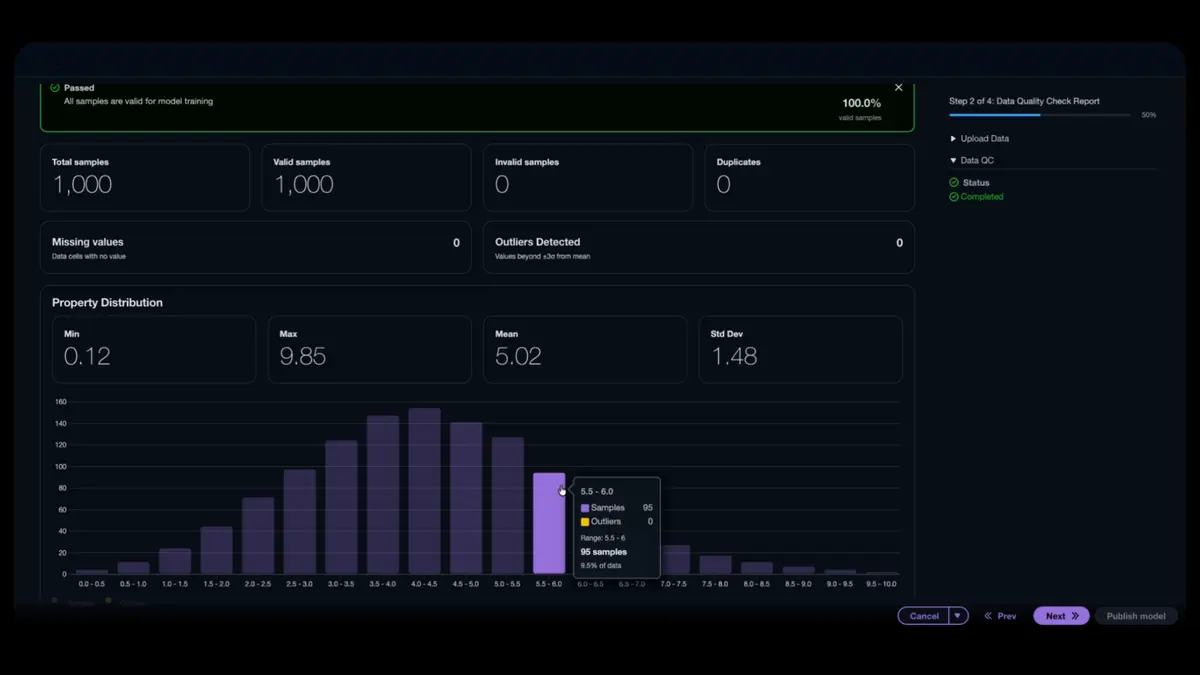

AWS has launched Amazon Bio Discovery, an AI-based application for drug design and testing aimed at research teams, including scientists without coding expertise.
The application combines computational design tools and wet-lab validation in a single system. Researchers can use an AI agent to choose from more than 40 biology models, set up experiments, assess candidate molecules and send selected candidates to laboratory partners for testing.
The launch targets a longstanding problem in drug research: computational biology teams and bench scientists often work in separate systems and rely on manual handovers. That can slow progress, make experiments harder to reproduce and limit how many projects a team can run at once.
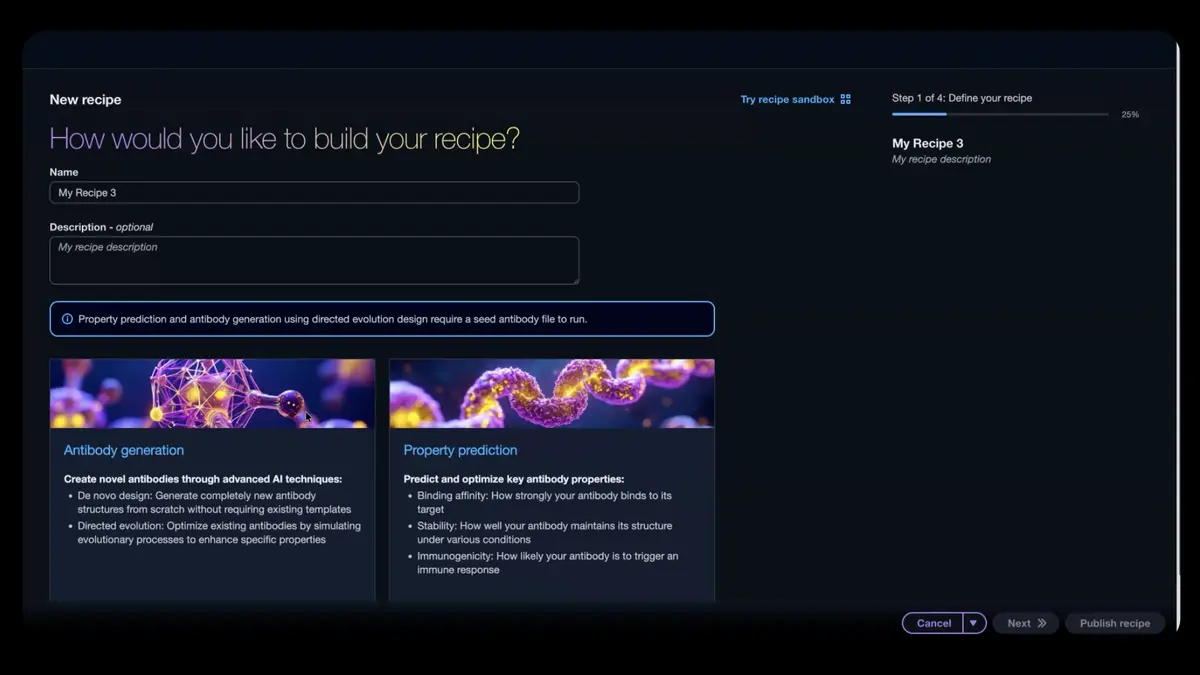
Amazon Bio Discovery includes a catalogue of AI models for tasks such as antibody design, binding prediction and developability assessment. Scientists can also upload their own models or use third-party licensed models, while computational biologists can build and publish workflows in a no-code environment for colleagues to use.
The system is designed to let bench scientists run multiple versions of an experiment in parallel and adjust inputs with help from the software agent. Lab testing results are then returned to the same application so teams can compare predicted and observed outcomes and refine later rounds of design.
Lab Links
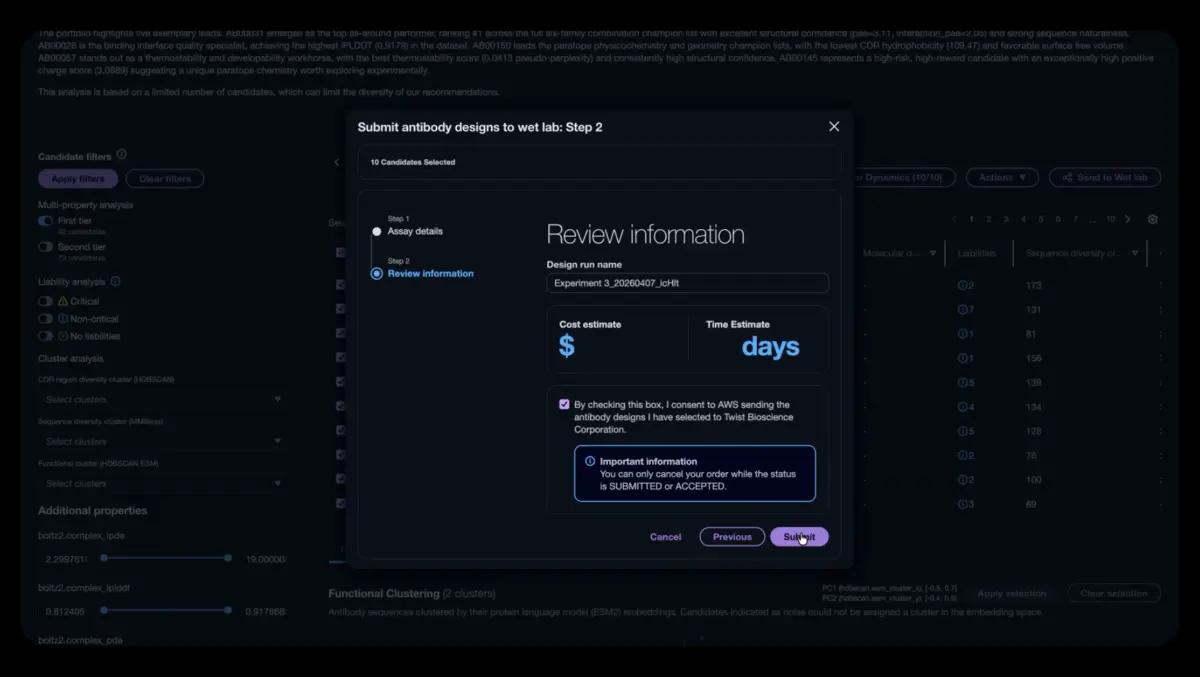
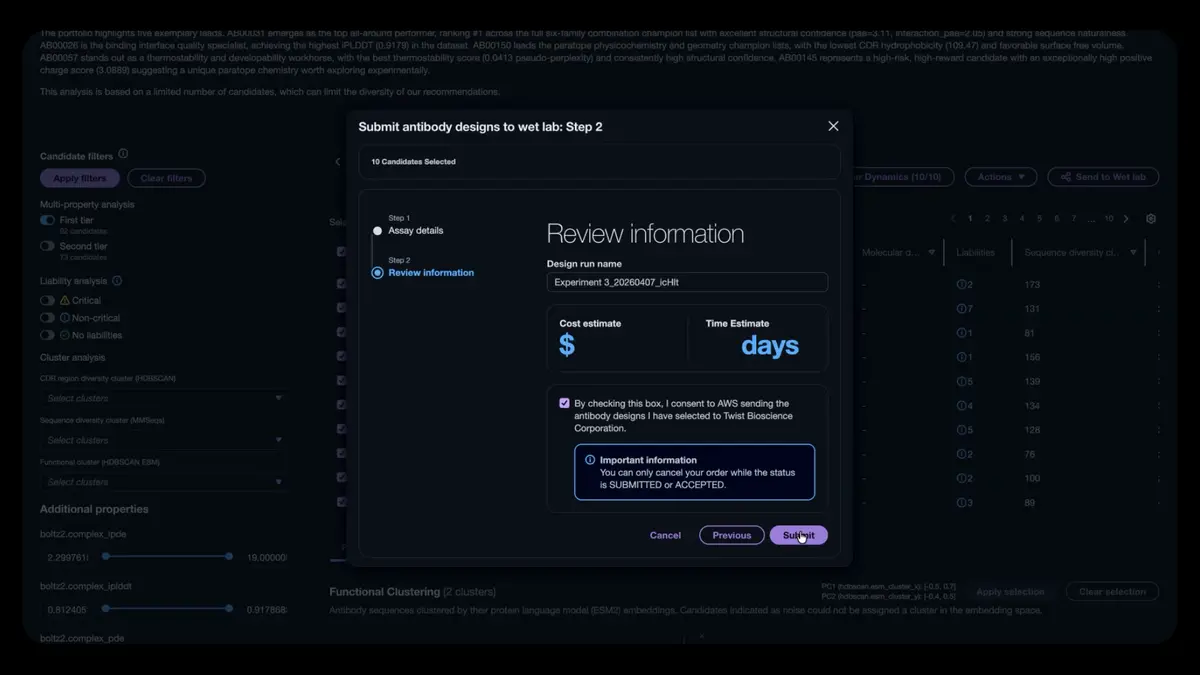
The application connects directly to contract research organisation partners including Ginkgo Bioworks, Twist Bioscience and A-Alpha Bio. Researchers can select assays and receive cost and turnaround estimates before submitting candidates for testing.
Once testing is complete, the data is routed back into the software through what AWS calls an experimental data registry. This lets scientists track inputs and outcomes in one place and use the latest wet-lab results to fine-tune models.
The feedback loop is intended to support so-called lab-in-the-loop drug discovery, in which experimental results are fed back into computational models to improve later predictions. In practice, that approach has often been limited to larger organisations with the staff and infrastructure to manage both AI models and laboratory workflows.
Early Use
AWS cited work with Memorial Sloan Kettering Cancer Centre as an example of how the product has been used. In that project, Amazon Bio Discovery helped design nearly 300,000 novel antibody molecules, and the top 100,000 candidates were sent for testing within weeks rather than the far longer timelines common in traditional design methods.
AWS argues that the product could widen access to AI-assisted drug discovery by reducing the need for specialist coding and infrastructure management. Drug development routinely takes years, and tools that shorten early discovery stages are drawing interest across the pharmaceutical sector.
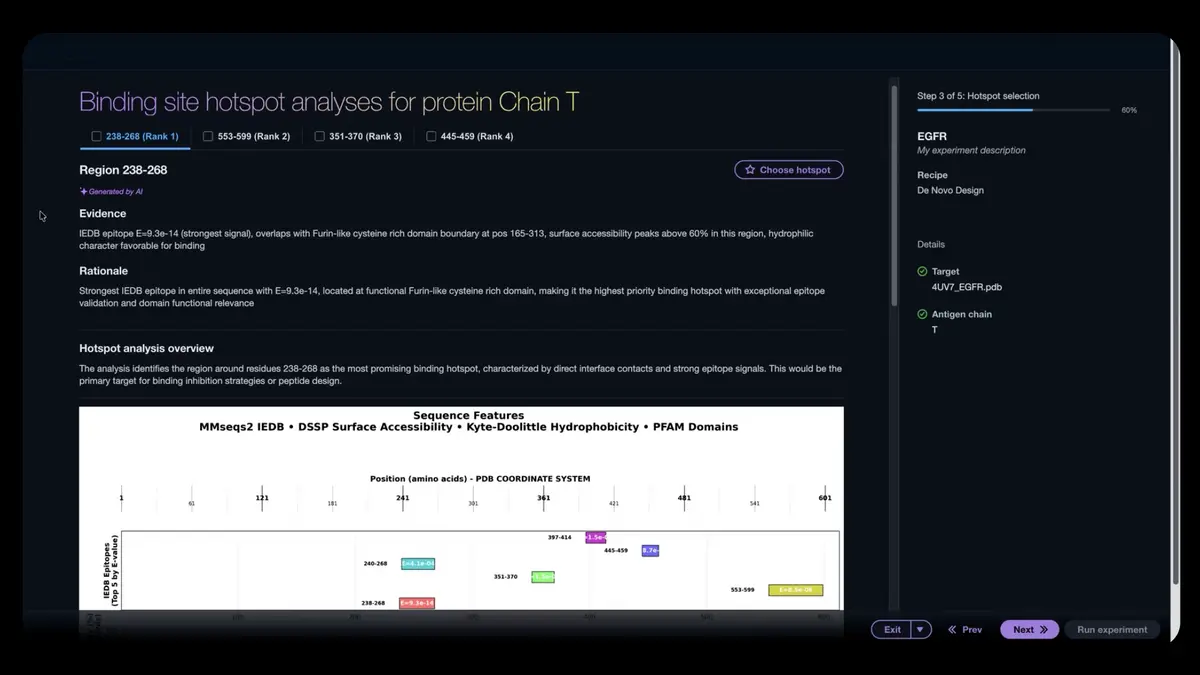
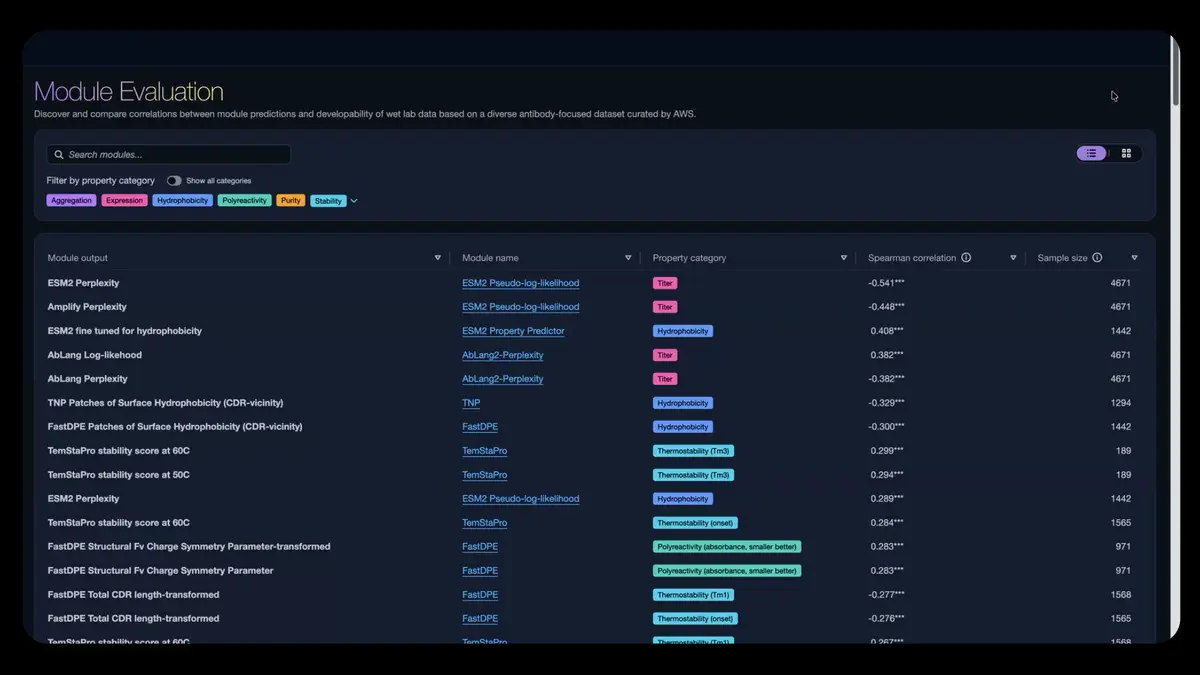
The product also includes benchmarking tools to help researchers compare models against reference datasets before choosing which to use in a workflow. Scientists can run head-to-head comparisons and review recommendations from the AI assistant, which suggests models and explains its reasoning.
Research Workflow
In a representative antibody design workflow, researchers first evaluate models and assemble an in silico pipeline. They then use the system to configure experiments, identify target residues and choose molecular frameworks before reviewing an AI-generated summary of results and a filtered set of candidates.
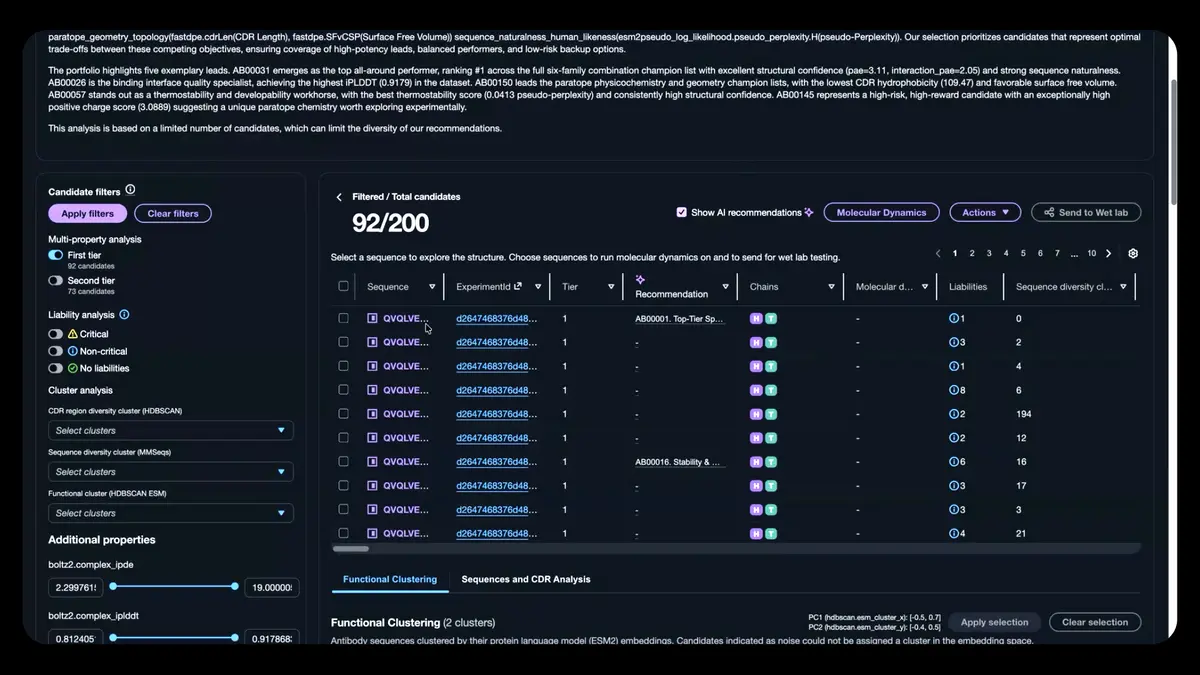
Those shortlisted candidates are then assessed through multi-property optimisation and liability checks before a final group is selected for laboratory validation. Researchers can compare the lab results with the original computational predictions and feed the new data back into later model training.
Amazon Bio Discovery is built on AWS cloud infrastructure and is intended for use across multiple research programmes. AWS says 19 of the top 20 pharmaceutical companies already use its infrastructure, and it is positioning the new application as a way to standardise how computational biologists and laboratory scientists work together in the same environment.
The launch pushes AWS further into the market for pharmaceutical research software, where cloud providers, specialist biotech software groups and AI model developers are all competing for a role in early-stage discovery. The commercial focus is increasingly on systems that tie model selection, experiment setup, laboratory execution and data management into one workflow rather than treating each step as a separate process.
With Amazon Bio Discovery now available, AWS is seeking to make that integrated approach a routine part of research, particularly for teams that have struggled to connect AI-based design with wet-lab testing at scale.