

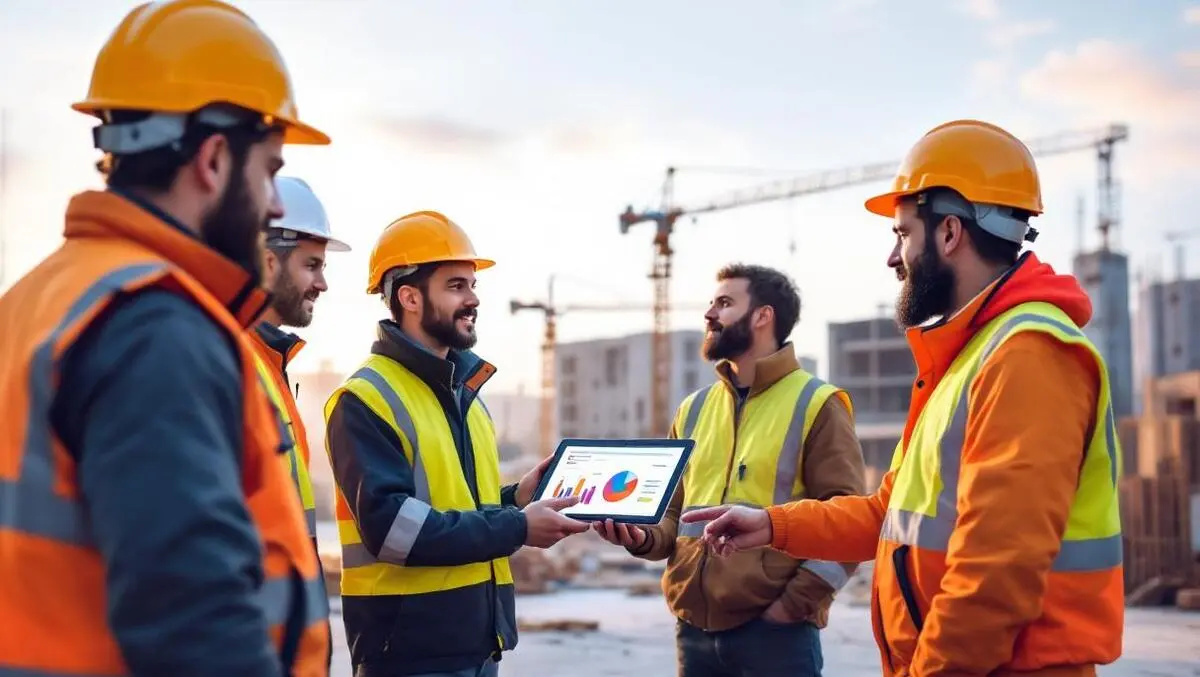
Construction turns to data-led, people-first safety
Wed, 18th Mar 2026.webp)
Construction firms are placing greater emphasis on proactive safety management as cost pressures, tighter schedules and more complex sites increase the risk of incidents and workforce strain.
That message emerged at a UK and Ireland safety and operations forum hosted by EcoOnline. The event brought together representatives from contractors and project organisations including AtkinsRéalis, Colas and Winvic. Discussions focused on earlier warning signals, reporting culture and the role of software in improving visibility across sites.
Construction continues to record the highest worker fatality rates in the UK, participants said. Against that backdrop, the forum noted a shift away from approaches that rely on injury statistics and other lagging measures that only become clear after harm occurs.
Leading indicators
Speakers described how operational pressure can narrow the margin for error. They cited rising costs, compressed delivery timelines and increasingly complex working conditions. Participants also raised the psychosocial pressure on workers, which can affect attention, communication and willingness to speak up.
A recurring theme was the use of leading indicators, including near-miss reporting and trend analysis. These measures can highlight deteriorating conditions, repeated hazards and gaps in controls before they result in serious harm.
"Our focus is on near-miss reporting and trend analysis as leading indicators, so we can act earlier and prevent incidents that have a much higher potential to cause harm," said Pat Sheehan, Associate Director, SHEQ, Colas.
Forum participants also raised concerns about relying on traditional health and safety measures focused on historical outcomes. Some companies are moving towards serious injury and fatality prevention frameworks that prioritise high-consequence risks.
"We put much more emphasis on Serious Injury and Fatality (SIF) prevention. Total Recordable Injury Frequency (TRIF) reflects past outcomes, not future risk," said Dan MacLeod, Global Lead for Programs & Systems, AtkinsRéalis.
Reporting culture
Attendees also discussed the link between reporting levels and workplace culture. The forum emphasised psychological safety as a condition for reliable reporting of hazards, near misses and other weak signals.
EcoOnline cited its 2025 survey of UK workers, which found that "more satisfied staff" was the most common improvement linked to greater investment in safety. Participants connected that result to retention and workforce stability, as well as day-to-day site performance.
Winvic highlighted the risk of under-reporting when workers expect blame or negative consequences. Participants discussed whether mobile tools and reporting options could make it easier to submit observations in real time, including anonymously.
"If workers think blame is coming, reporting drops," said Steven Poxton, Senior HSEQ, Winvic.
Contractor controls
Another focus was contractor competency and consistent checks across multiple sites. Large projects can involve changing teams, specialist subcontractors and varying documentation standards, while supervisors manage these checks alongside delivery tasks.
Participants said digitised processes for contractor certification, permitting, onboarding and safety training could improve consistency and reduce administrative workload. They also flagged the difficulty of maintaining visibility when documentation sits in different systems, or when paper processes slow verification on site.
Research referenced at the event suggests spending on control-of-work software is increasing. Verdantix found that 40% of surveyed medium-, high- and very-high-risk firms plan to increase spending in the coming year, and projects total spending will surpass USD $1.5 billion by 2030.
Tech versus vigilance
Alongside digitisation, participants debated how to adopt new technologies without weakening frontline vigilance. Cameras, sensors and automatic braking systems were cited as tools that can reduce certain risks. Speakers also warned that over-reliance on technology can introduce new hazards if it reduces situational awareness or discourages active supervision.
"Technology can reduce risk, but it does not remove the need for people to think and intervene," said Sheehan.
EcoOnline positioned software as a way to improve visibility and support decision-making while keeping human oversight central. It also described the forum as a mechanism for sharing approaches across organisations facing similar pressures.
"As pressures grow and technology moves faster than ever, construction leaders are looking for a trusted partner to help carry the burden, so they can protect people and future-proof their business. That's why we bring leaders together through forums like this: to share what's working, debate priorities, and accelerate safer operations. Our role is to support better decisions with insight, not replace human judgement. As the forum reinforced, construction safety should be data-driven, but it is fundamentally people-centred," said Tom Goodmanson, Chief Executive Officer, EcoOnline.
Participants said they expect the focus on leading indicators, reporting culture and contractor controls to intensify as projects grow more complex and firms standardise digital safety and operational processes across site portfolios.