

Dell & Nvidia bring secure local AI agents to desktops
Tue, 17th Mar 2026
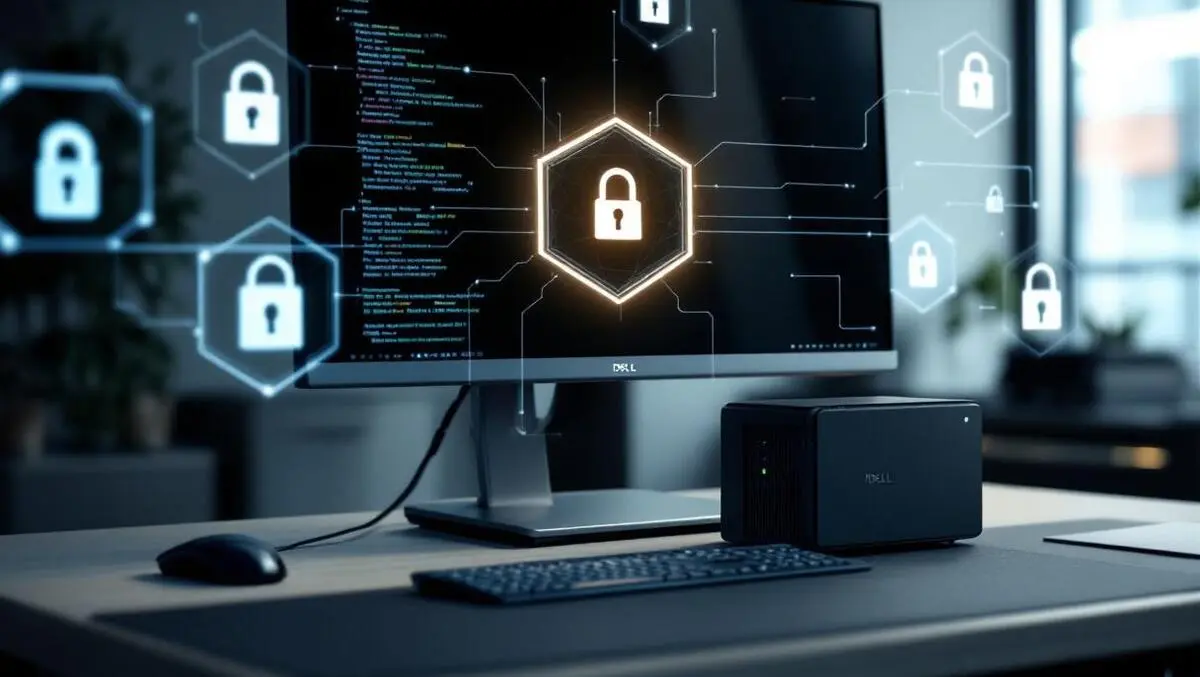
Dell Technologies has added support for Nvidia NemoClaw and Nvidia OpenShell across its Dell Pro Max desktop line, expanding the companies' work on tools for secure, autonomous AI agents that run locally.
The update pairs Dell's workstation-class desktops with Nvidia's open source software for long-lived agent workflows. The companies say the combination helps run autonomous agents with stronger controls while keeping inference on-device by default.
Agent security
Nvidia NemoClaw is an open source stack that packages the components needed to run OpenClaw "always-on assistants" with a single command. It installs Nvidia OpenShell-an open source runtime designed as a controlled environment for autonomous agents-and includes open source models such as Nvidia Nemotron.
Autonomous agents carry higher risk than traditional chat interfaces because they can execute multi-step tasks over extended periods. They may call tools, write and run code, and interact with data sources, making security and governance central to enterprise deployment discussions.
Dell and Nvidia describe OpenShell as an infrastructure layer that isolates a coding agent in a sandbox. Agents start with no permissions, and actions are enforced through policy at the infrastructure layer.
The announcement follows the release of OpenClaw earlier this year. The companies point to rapid community interest as evidence of demand for systems that act more independently than earlier AI assistants.
Desktop hardware
Dell is linking the new software support to two Dell Pro Max configurations based on Nvidia's Grace Blackwell platform. The systems target developers and organisations that want to run advanced models locally rather than rely on cloud services.
Dell Pro Max with GB10 is described as a compact desktop system with up to 1 petaFLOP of FP4 AI performance and 128GB of coherent unified memory. Designed for always-on operation for long-running agents, it can scale to four-unit configurations.
Dell is also working with Nvidia on an air-gapped option for federal customers, designed for physically isolated environments with no external network connections and positioned for classified and sensitive data.
Dell Pro Max with GB300 is positioned as a deskside system that brings datacentre-class components into a desktop form factor. Dell says it is the first OEM to ship a desktop built around the Nvidia GB300 Grace Blackwell Ultra Desktop Superchip.
Using Dell's figures, the GB300 configuration delivers up to 20 petaFLOPS of FP4 performance and 748GB of coherent memory. Dell says that level of compute and memory targets "trillion-parameter scale" agent workloads that run fully locally without a cloud connection.
The local-first approach is framed around data privacy and operational resilience. Keeping inference and agent execution on-device reduces reliance on internet connectivity and, in many workflows, avoids transferring data to external services.
Market context
The combination of sandboxing, policy controls, and local compute reflects a broader shift in enterprise AI: organisations want more capable models while retaining governance over what automated systems can access and do. Agentic workflows also raise hardware demands because they can run continuously, spawn sub-agents, and maintain longer context.
Dell is positioning its Pro Max desktops for teams that want to develop and deploy agents from the desk outward, rather than building around centralised infrastructure from the start. The approach also aligns with growing interest in on-premises AI in regulated sectors and among organisations with strict controls over data movement.
Jeff Clarke, Chief Operating Officer, Dell Technologies, said:
"Autonomous agents are the next wave of AI, but enterprises won't deploy them unless they can run locally on sensitive data with strong security controls. Our Dell Pro Max desktops and NVIDIA OpenShell help solve that. We're first to ship this capability, and it fundamentally changes how developers build and deploy AI."
Chris Marriot, Vice President, Enterprise Platforms, Nvidia, said: "The next chapter of AI is autonomous, self-evolving agents that reason, learn and act on complex tasks. NVIDIA OpenShell provides a runtime to help these agents run with more privacy and security, and Dell Pro Max systems deliver desktop compute power to run them at scale."
Snowflake pointed to its own research workflows as an early example of how high-end desktop configurations could change iteration cycles for model development. Dwarak Rajagopal, VP of AI Engineering and Research, Snowflake, said: "Dell Pro Max powered by GB300 lets the Snowflake AI Research Team post-train 32B-scale models and push sequence lengths beyond 128K on a single GPU at their desks. With Arctic Training, Snowflake's modular framework for simplifying and accelerating LLM post-training, our researchers can rapidly prototype new training approaches and bring innovations into production faster. That dramatically shortens the feedback loop between new training ideas and production-ready AI systems."