

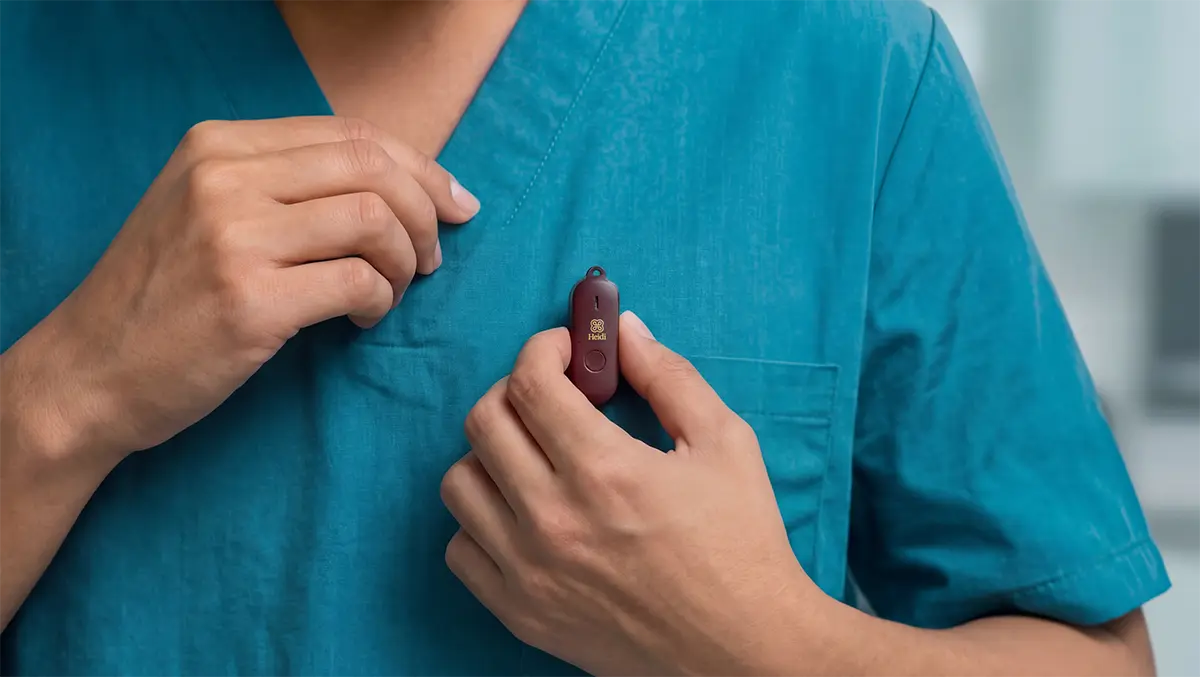

Heidi has launched Heidi Remote, a wearable audio capture device for clinicians and the company's first hardware product.
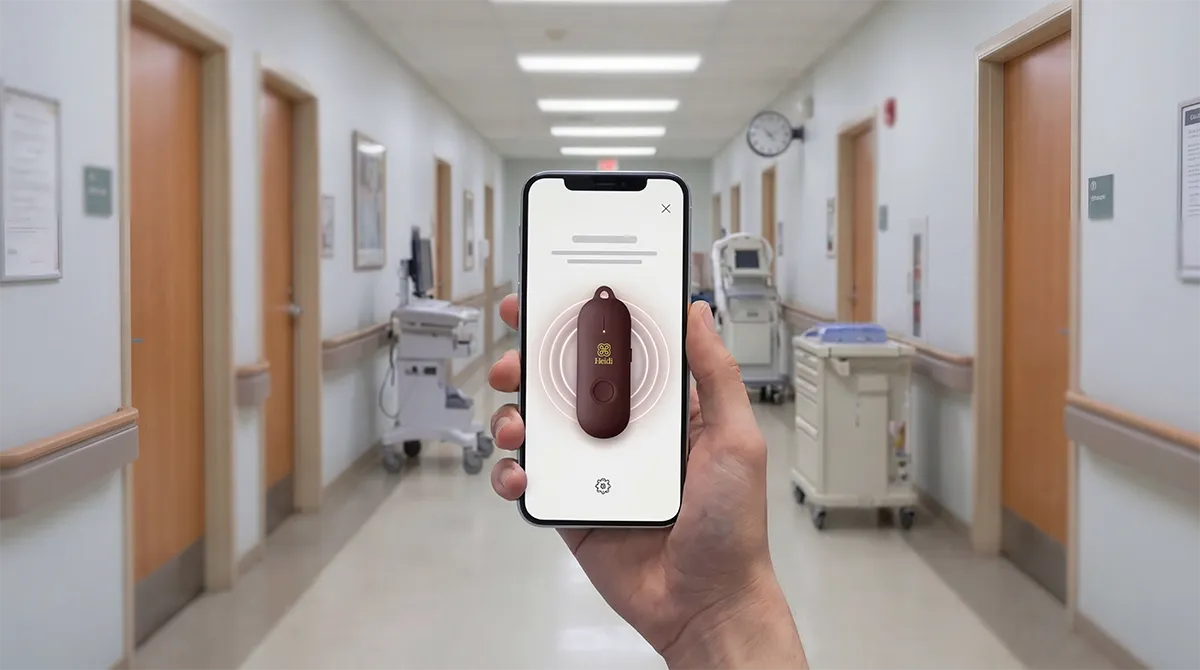
The device is designed to record consultations without relying on a clinician's phone or laptop. It is intended for use in consult rooms, hospital wards, theatres and rural settings, including areas with unreliable internet access.
The launch expands a business that has so far focused on clinical administration software. Heidi's AI scribe is now used in about 2.5 million consultations a week globally and has supported more than 115 million sessions over the past 18 months.
That growth has exposed a practical problem for healthcare providers using AI tools in day-to-day care. Many clinicians still rely on consumer devices to capture consultation audio, even though those devices are not designed for noisy medical settings, frequent cleaning or long clinical shifts.
Hardware push
Remote is a dedicated microphone worn by the clinician to improve the consistency of captured speech. Background noise, movement and room acoustics can affect transcription quality when a phone is placed on a desk or a laptop is used during an appointment.
The device weighs 21g and offers up to 14 hours of battery life. It can capture consultations offline and sync once connected to a phone.
It is also built for regular cleaning and uses encrypted data handling. Pricing was not disclosed, but the product is aimed at individual clinicians as well as practices.
The move takes Heidi into a new area of the healthcare technology market as adoption of AI scribes rises. In Australia, clinicians using its scribe reclaim an average of 59 minutes a day, time that can be redirected to other work.
Workflow focus
Remote follows Heidi's expansion beyond transcription into other products, including Heidi Evidence for surfacing medical research during care and Heidi Comms for managing patient communications such as calls, bookings, reminders and follow-ups.
Together, those products reflect a broader effort to cover more of the administrative workflow around patient care. The addition of a physical device suggests the quality of audio capture is a limiting factor in how well AI documentation tools perform in clinical practice.
Hospitals and clinics can be challenging environments for voice technology. Shared terminals, ageing desktop systems and busy treatment areas are common across health services, while emergency departments can reach noise levels more often associated with industrial workplaces.
In those settings, the reliability of captured speech can affect the quality of AI-generated notes. For clinicians, that makes hardware part of the documentation chain rather than a separate purchasing decision.
Heidi argues the consult room is changing as AI scribing becomes more common. When clinicians rely on personal devices for recording, it says, the technology can alter the dynamic of the consultation by placing a screen between doctor and patient.
Company growth
Founded in Melbourne, Heidi says its products are used in 190 countries and support 110 languages. The company has raised USD $96.6 million from investors including Point72 Private Investments, Blackbird, Headline, Latitude, Possible Ventures and Archangel.
Availability of Heidi Remote may vary by market, reflecting different regulatory requirements across jurisdictions. That is likely to matter in healthcare hardware, where deployment can face approval and compliance standards that differ from software.
For Heidi, the significance of the launch lies not only in releasing a new product but in designing its own device rather than leaving audio capture to consumer technology. The move marks a shift for a company that has until now focused on software for clinical documentation and communication.
Dr Thomas Kelly, co-founder and CEO of Heidi, said: "AI scribing has transformed how clinicians manage documentation, but the weakest link has always been the device in the room. A phone propped on a desk, a laptop left open, a dropped connection in a rural clinic. These aren't edge cases; they're daily realities for thousands of clinicians. Heidi Remote closes that gap. It's a purpose-built tool that fits into the way clinicians already work, so the technology matches the standard of care they're trying to deliver."