

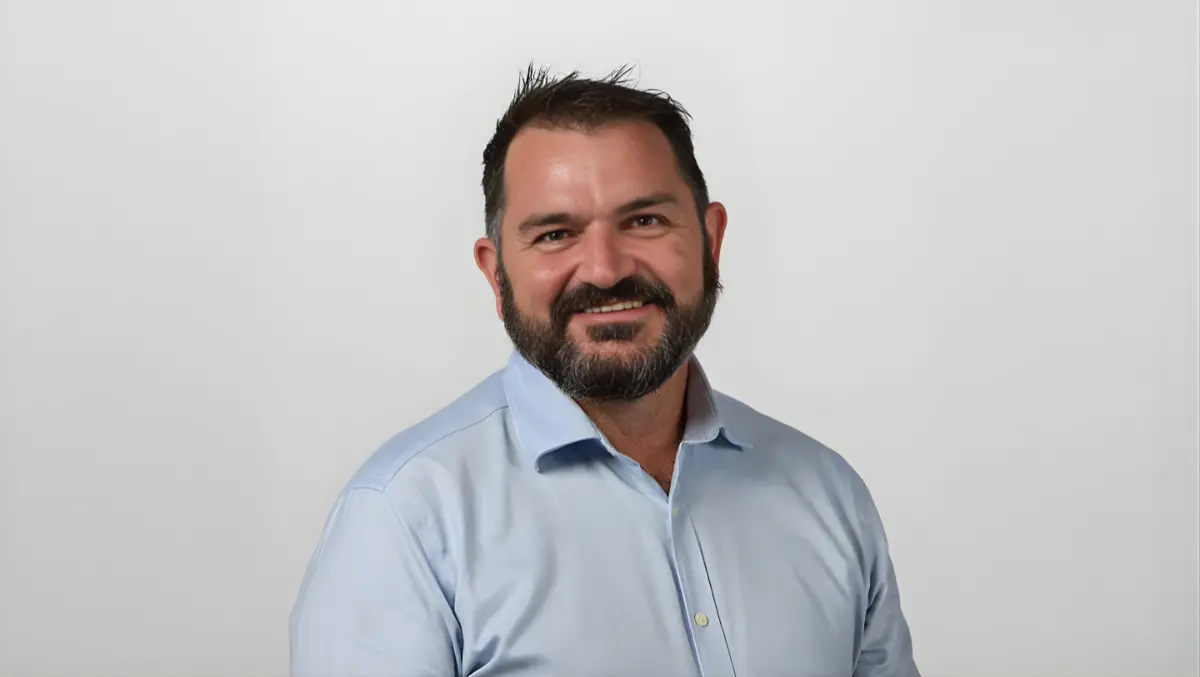
Atturra's Chris Rae: Choose the happy path (or, why 'perfect' automation fails)
Mon, 30th Mar 2026
Mining's a tough business, and that's long before you even head down into the hole. First there's a maze of compliance to negotiate and which if done wrong, will result in the roof coming down on your head. Figuratively, at this stage, and call it a minefield, if you must. With at least some of this compliance done the old-fashioned way, with clipboards and HR people occasioning all manner of colourful language from tradies and engineers, the also old-fashioned problems of manual paper-based processes are never far from the coal face.
After a rule change further tightening compliance requirements over in the mines of Western Australia, Atturra got involved with the leadership of business technologist Chris Rae. He led the creation of a digital platform called Credential Data App that lets workers upload licenses, medical clearances, and training records directly into the company's SAP system, with AI quietly ensuring every detail is accurate and compliant.
"The old process was a nightmare for HR," Rae says. "Workers would email PDFs, fax forms, or hand-deliver documents. It took days, sometimes weeks, and errors were inevitable while people sat on the bench instead of being on duty. We cut that workload by 80% almost overnight."
While the immediate outcome of a neat AI-powered automation is awesome for the client concerned, a couple of broader lessons emerged which may well prove handy for, well, anyone looking to send paperwork to the shadow realm. Where it should, of course, belong.
When automating any process, says Rae, focus on 'the happy path'. "We didn't try to build an automation that could handle every possible exception from day one," he explains. "That's where most projects go wrong. You could end up with an insanely complex application that's brittle, expensive to maintain, and actually slower than doing things manually."
Perfect is the enemy of good, as the smart people sometimes say. They also sometimes say 80% of the outcomes are driven from 20% of the effort, and bandy about the words 'Pareto Principle'.
"The happy path is the straightforward process that works exactly as it should nearly all of the time," Rae continues. "It just works, with self-service in this case by the worker, with the system verifying everything."
Straight-through processing, the way everyone likes it. But exceptions are inevitable, particularly when any sort of human is involved as a 'user'; they often come up with the most fantastic and unexpected ways of interacting with even the most foolproof of systems and/or processes.
That, Rae says, is reality and also no problem. In these inevitable 'unhappy paths', the logic he applies is as simple as it is profound: instead of coding for it, simply boot it out of the automated process, and give it straight to the human in the loop. People are, after all, incredibly good at handling exceptions, while automations tend to fall over fast.
"When something's off, it kicks out instantly to a human operator with clear context about what went wrong. The operator fixes the 'oddity', maybe a misspelled name or an expired cert," Rae confirms.
More secret sauce and good advice from Rae is that the automation doesn't end there, because nor does the process. There may be multiple additional steps before completion, and once the immediate problem causing the exception is resolved, it gets expensive if the rest of the process remains with the human operator. The answer? "The human can resume the process right where it left off, with no starting over and no lost data, and a consistent outcome," he explains.
There's a bit of design philosophy behind this elegant solution, he adds. "Human-centred design means we automate the boring, repetitive stuff so humans can do what they're actually good at, judgment, empathy, and problem-solving. We built the system to celebrate the happy path and gracefully hand off the exceptions. That's what makes it reliable at scale."
As Rae puts it with a grin: "We didn't aim for perfection. We aimed for something that simply works beautifully, Most of the time."