

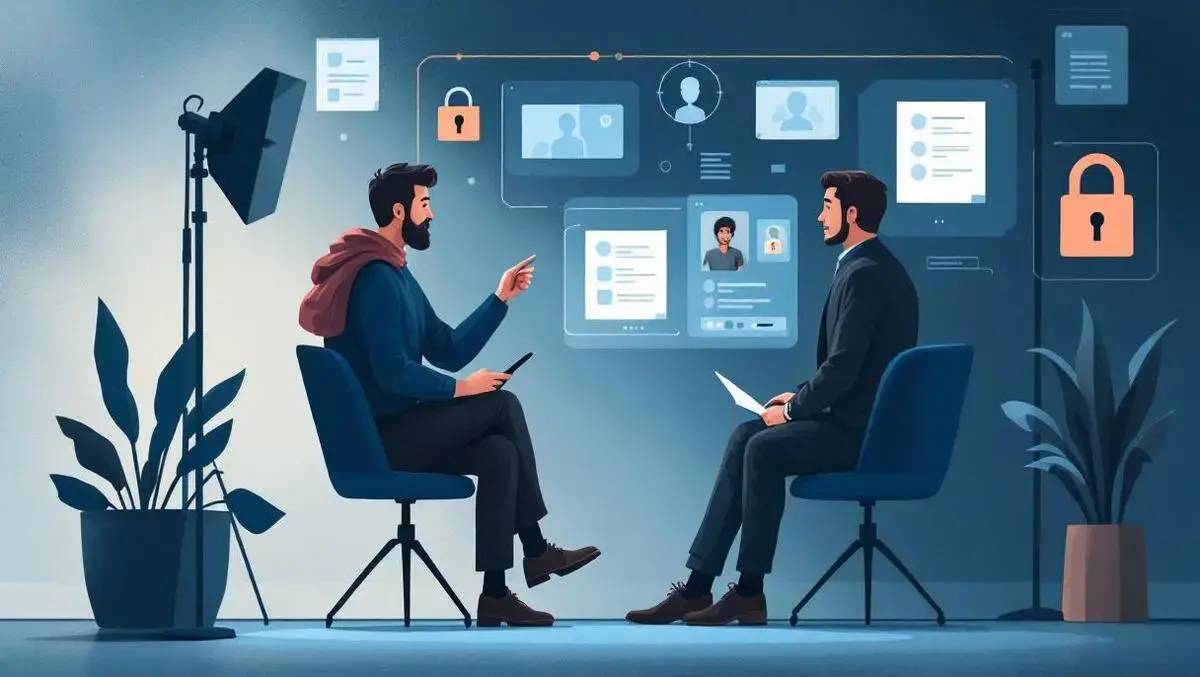

Authentic Interactions has appeared on CNN in the series Kara Swisher Wants to Live Forever, which featured the company's StoryFile and Lookalike technologies.
The episode follows journalist Kara Swisher as she interacts with a digital version of herself created using those tools. Authentic Interactions filmed a "storyfile" for Swisher, an interactive video experience built from recorded responses designed to answer questions in her own voice.
The production combined two systems developed by the Los Angeles company. StoryFile uses a library of pre-recorded video answers matched to viewers' questions, while Lookalike generates a digital representation that can present responses in a more fluid conversational format.
According to Authentic Interactions, the digital Kara was created from a recording session in which a human interviewer prompted Swisher to recount stories and viewpoints across a range of subjects. Those recordings then formed the basis of the responses delivered by StoryFile.
When Swisher later interviewed her digital self for the programme, StoryFile interpreted her questions and searched its library for the closest matching answer. Lookalike then extended the exchange by generating new video responses and drawing on material from Swisher's autobiography, Burn Book.
How it worked
The televised exchange highlights a growing area of artificial intelligence focused on digital legacy and recorded identity. Rather than relying solely on text generation, StoryFile uses video clips recorded in advance, which helps keep responses tied to the subject's own words and manner of speaking.
Lookalike takes a different approach. Authentic Interactions said it can create realistic digital representations from photographs and documents, allowing users to build an AI agent quickly for interactive settings.
The company presented the CNN appearance as a notable step in bringing this technology to a wider audience. The episode explored the overlap between artificial intelligence, longevity science and the question of how people might preserve aspects of themselves for future generations.
Swisher, a long-time technology journalist, served as the central subject of that examination. Her on-screen meeting with a digital likeness became a live demonstration of how recorded personal archives and generative video tools can be combined in a single conversational format.
Digital legacy
Authentic Interactions positions StoryFile and Lookalike within the market for preserving personal histories, institutional memory and recorded testimony. Companies in this space are seeking to meet demand from families, archives, museums and media producers for interactive ways to retain a person's voice, knowledge and image.
The appearance on a mainstream television network also reflects how synthetic media and conversational avatars are moving beyond specialist demonstrations into broader consumer and editorial settings. That shift creates opportunities for new forms of documentary storytelling, but also raises questions about authenticity, consent and the use of digital likenesses.
In this case, StoryFile relied on answers Swisher had already recorded herself, while Lookalike extended the interaction through generated video responses. The contrast between those two methods formed part of the on-screen discussion about the promise and risks of realistic digital humans.
Valorie Jones, chief technology officer at Authentic Interactions, commented on the Swisher project in a statement provided by the company. "Kara's storyfile demonstrated the future of human preservation - one that builds new personal human connections grounded in real lived experiences and authentic personalities," Jones said.