

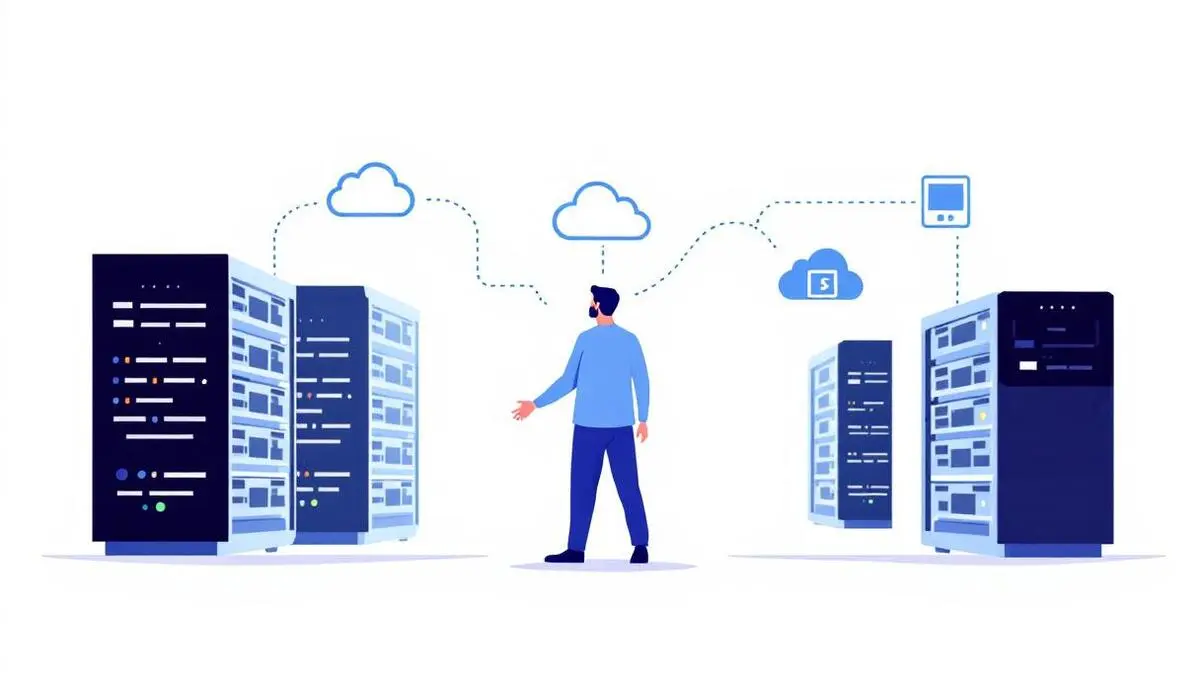
CTERA debuts Fusion Direct to unify file & object data
Thu, 12th Mar 2026
CTERA has launched Fusion Direct, a storage architecture that presents the same data as both files and objects within a single global namespace. It is pitched as a way for enterprises to avoid running separate file and object environments when they want to use unstructured data for collaboration, analytics and AI.
Many organisations still rely on network-attached storage for file access through long-established interfaces, while also adopting object storage for scale and cloud-native workloads. Those two models often operate separately, so data moves between systems through gateways, translation layers or duplicate copies. That approach can add cost, latency and operational overhead.
Fusion Direct treats files and objects as native forms within one federated data fabric. Data written as a file can be accessed as an object, and data written as an object can be accessed as a file. It also supports bidirectional reads and writes.
Fusion Direct joins the company's Fusion product family alongside Fusion Gateway, and will be available as a core component of the CTERA Intelligent Data Platform.
Access methods
The system maintains file access over SMB and NFS, common protocols for enterprise applications and end users, and exposes the same data to object clients over S3. An optional S3 over RDMA mode targets high-throughput networking environments.
CTERA described the approach as eliminating file-to-object conversion and avoiding the need for a translation gateway for object access. It also said the design does not depend on a proprietary chunking scheme.
Frost & Sullivan Industry Director for ICT Karyn Price said organisations often struggle to use unstructured data across different computing models.
"Enterprises are struggling to unlock the full value of their unstructured data. The irony is that the file systems that make data useful for people often make it inaccessible for modern AI and analytics engines," Price said.
"A platform that can fluently speak the languages of both worlds, presenting data as files for users and as objects for machines, removes a fundamental barrier to progress. This unified approach is essential for any organization looking to build a data foundation that is truly ready for the demands of AI," she said.
Existing buckets
A key focus is reusing existing object storage. Existing S3 buckets can be attached directly, with their contents made available through file interfaces without migration or modification, according to CTERA. It also said the same model works across edge locations and multi-cloud deployments, providing a global view of the dataset.
Cloudian, an object storage supplier, highlighted integration with its platforms. "Our customers are looking for the limitless scalability of object storage and the broad compatibility of traditional file access," said Amit Rawlani, senior director of Technology Alliances & Solutions at Cloudian.
"CTERA Fusion Direct is the first technology we've seen that delivers this without the performance trade-offs of a traditional gateway approach. By combining our best-in-class object storage with CTERA's native enterprise data and content services, we provide a powerful, no-compromise solution to unify the enterprise data landscape," Rawlani said.
Performance claims
CTERA said Fusion Direct uses a "native zero-copy" approach, where data written through the platform becomes available as standard S3 objects without duplication. Attached S3 buckets can also be exposed as files without adding storage overhead, it said. The company also highlighted "high-speed file streaming" from object storage for large media and dataset use cases.
For AI and high-performance computing, CTERA said the product supports "S3 over RDMA and GPU-Direct Access", which it described as a path to high-bandwidth access for AI clusters and GPU infrastructure that reads and writes object data.
CTERA also said data remains in standard S3 buckets rather than being encapsulated in a proprietary format, which it tied to data sovereignty and portability across cloud and on-premises environments.
The company also cited a US patent for "direct object to file mapping in a global file system" as part of the foundation for Fusion Direct.
"The primary roadblock to enterprise AI has not been a lack of data, but the inability to use it effectively. The historic divide between data for human collaboration and data for machine analytics created friction and complexity that slowed companies down," said Oded Nagel, CEO of CTERA. "We've collapsed those silos. This fundamental shift in architecture unlocks the full potential of a customer's data, providing the unified data platform necessary to not just compete, but to lead in an economy increasingly driven by machine learning."
Fusion Direct is available now as part of the CTERA Intelligent Data Platform.