

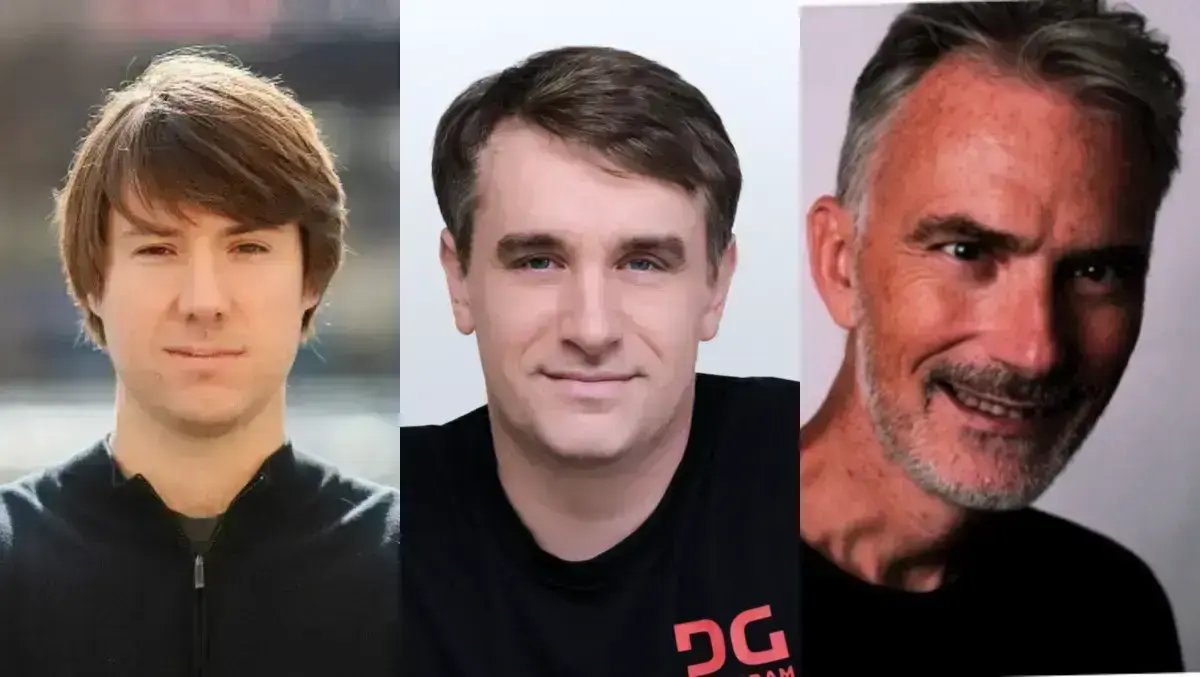

European tech founders remain reliant on US cloud and AI providers, according to new survey data from investor AVP, highlighting a gap between Europe's push for technology sovereignty and startup behaviour.
AVP's annual Transatlantic Founder Index surveyed more than 100 venture-backed technology founders in Europe and the US. It found that 69% of companies run primarily or entirely on US cloud and AI providers, including 62% of European-founded companies.
The data suggests many founders do not see European alternatives as a practical substitute. Fewer than one in four European founders said they cared about their dependency on US infrastructure. Respondents instead pointed to the scale, performance and developer ecosystems offered by American providers.
François Robinet, managing partner at AVP, said cost and execution risk were central to that calculation. "Switching away from a working cloud provider or rebuilding an AI integration on a European alternative that does not yet exist at the same capability level is an expense most growth-stage companies cannot justify.
"They cannot afford to move away from infrastructure that works when European alternatives are not yet ready. Companies will use the tools that help them survive and scale."
Capital pressures
The survey also found that infrastructure dependence sits alongside a financing gap that continues to weigh on European startups. Nearly one in three European founders, or 29%, said they would consider relocating their headquarters to the US to improve access to capital. No US founders reported considering such a move.
European founders rated access to capital at 5.5 out of 10, compared with 7.7 among US founders. The 2.2-point gap was the largest finding in the index and had changed little from the previous year.
That disparity appears to be shaping strategic decisions beyond fundraising. For some companies, it raises the prospect that maintaining a European base may become harder if larger rounds, later-stage backing and broader investor pools remain easier to access across the Atlantic.
Robinet framed the issue as one of durability rather than ideology. "The point is not European protectionism.
"It is European permanence. The founders in this report are not choosing between the US and Europe. They are demanding the right to build globally without having to abandon where they came from to do it. That is a reasonable demand which has not, until now, been adequately met."
Exit routes
The data also points to a sharp shift in expectations around exits. In the previous edition of the survey, 11% of European founders named an initial public offering as their target exit. In the latest findings, that figure fell to fewer than 5%, while among US founders it dropped to zero.
Instead, 63% of all founders said mergers and acquisitions were now the most realistic route. For European startups, that implies a market in which successful companies may still be built locally but are increasingly likely to end up in US hands.
The survey also paints a broader picture of a sector that has moved away from the growth-at-all-costs model that defined much of the venture market earlier in the decade. Only 6% of founders said aggressive growth remained their primary focus, while 66% said they were pursuing balanced growth and profitability.
Over the past two years, founders have also tried to extend their financial runway. AVP found that 96% of respondents had done so, reflecting a market in which investors have become more cautious and founders have responded by tightening operating discipline.
Kos Stiskin, co-founder and chief executive officer of Finom, said: "Profitability becomes a concern when the money runs out. Minus a tiny handful of outliers, the vast majority of companies have to grow profitably."
New constraints
As fundraising pressure has persisted, customer acquisition has emerged as the main operating challenge. The survey found that 41% of founders now see winning customers as their top growth issue, ahead of access to capital and the mechanics of scaling operations.
That shift suggests startups that survived the funding slowdown are now competing on commercial execution. The issue is no longer only whether companies can raise money, but whether they can do so while demonstrating clear unit economics and a credible path to profit.
Scott Stephenson, co-founder and chief executive officer of Deepgram, said: "The wind is shifting. Investors are looking at gross margins and unit economics in addition to topline growth. You see it in cancelled projects across the industry - the market is asking for high growth and discipline. That's always been Deepgram's approach: own the models and infrastructure, control the cost curve, build a strong core business that fuels innovation."
There were, however, some signs of improvement for Europe. The talent gap between Europe and the US had narrowed to 0.8 points, with a visible reverse flow of senior operators moving from the US back to Europe, citing visa friction, political uncertainty and family concerns.
Even so, the survey's central finding remains: Europe's startups continue to build on American infrastructure, seek American capital and increasingly view acquisition rather than flotation as the most plausible endgame.