

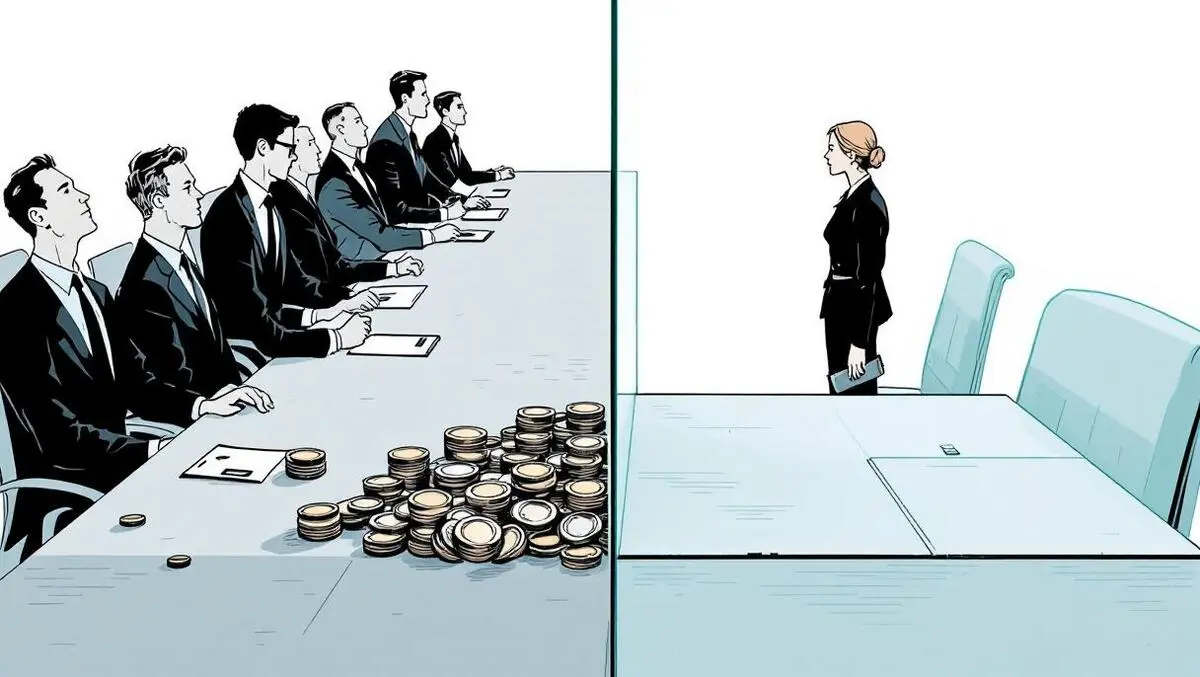
'He/Him Salary' & hidden barriers still hold women back
Fri, 6th Mar 2026
Business leaders in insurance, recruitment and technology warn that structural barriers, opaque pay practices and gaps in workplace support continue to limit women's progress, despite renewed corporate focus ahead of International Women's Day.
Commentary from Angelica Solutions, Oleeo and G2A.COM points to recruitment systems, informal networks and compensation structures that still reflect historic inequalities, affecting women's careers, earnings and access to leadership.
The warnings come as labour market data shows persistent gender pay gaps in the UK, the US and globally, and as employers face growing scrutiny over how hiring and reward models work in practice.
Hidden barriers
Angelica Solutions, which works with insurers on data and actuarial projects, said long-standing hiring and career development practices continue to undervalue women, particularly those with non-linear careers.
"It's not enough to ask where the women leaders are. We need to look at the conditions we create or fail to create for women returning to work, switching paths, or working flexibly. The way we define and reward talent needs to change," said Sarah Vaughan, Founder and Director of Angelica Solutions.
The firm pointed to recruitment processes that rely heavily on platforms such as LinkedIn, which favour uninterrupted work histories and visible professional networks. It argued that these filters can sideline applicants who have taken career breaks or who do not engage in continual online networking, which it said remains more common among women.
It also highlighted the influence of informal industry networks. After-hours events, networking meetups and social gatherings often act as gateways to new roles and promotions. Women who shoulder more caring responsibilities or school pick-ups are less likely to attend, slowing progression even when skills and performance are equivalent.
Similar patterns can affect entrepreneurship. Women considering self-employment may face a lack of paid parental leave or income protection when revenue is uncertain. Angelica Solutions noted that around 20% of UK businesses are female-founded, framing this as an access-and-risk issue rather than a lack of intent.
Everyday inclusion
Angelica Solutions said progress on gender equity depends on how everyday processes are designed inside organisations, not just on headline policies.
"Progress isn't only about boardroom quotas or diversity statements. Instead, it's about how inclusion is designed into the day-to-day: from how job specs are written, to how performance is measured, and how flexibility is offered," Vaughan said.
"This isn't about lowering standards. It's about widening the lens through which we assess potential. Talent, insight and leadership often come from those who've taken a different path," Vaughan added.
'He/Him salary'
In recruitment and pay, Oleeo Founder and CEO Charles Hipps said a new phrase is emerging in workplace discussions: the "He/Him Salary". He said it reflects a higher salary level for male candidates in similar roles.
"The idea of a 'He/Him Salary' highlights the reality that two people can perform the same role yet receive different compensation depending on negotiation dynamics, historical pay benchmarks or unconscious bias," Hipps said. "Salary decisions often rely on signals such as previous earnings, candidate expectations or informal negotiation rather than objective evaluation of the role itself. When those signals reflect historic inequalities, pay gaps are not reduced - they are reproduced."
Hipps said the concept reflects greater scrutiny of how employers set and adjust pay, and argued that structural approaches are more effective than asking individuals to negotiate harder.
"Pay disparities are rarely solved through negotiation. They are solved when organisations design compensation systems where pay reflects the role and capability consistently, regardless of who fills the position," he said.
Gender pay gap reporting and transparency rules have increased visibility over headline numbers, but Hipps said underlying processes often still rely on prior salary benchmarks and informal negotiation. He argued that this can sustain disparities even in firms that consider their practices fair.
"Even organisations with good intentions can unintentionally reinforce pay gaps if compensation decisions rely heavily on negotiation or prior salary expectations," Hipps said. "Research consistently shows that negotiation dynamics differ across genders, which means pay outcomes can diverge even when employers believe they are operating fairly."
Structured pay
Oleeo said clear pay bands, limits on using previous salary data, and structured hiring frameworks can reduce subjectivity in pay and progression decisions.
"When employees believe that pay levels differ depending on who negotiates hardest, it can undermine trust within the organisation," Hipps said. "Transparent, structured approaches to compensation are not only fairer - they also improve retention, engagement and employer reputation."
He also recommended formal scoring systems for hiring and promotion, saying skills-based assessment and clear communication about how staff move through pay bands can support consistency across roles and teams.
Tech sector gaps
In the global technology industry, leaders highlighted representation in leadership and work-life balance as key pressure points.
"Two of the biggest gaps for women in today's workforce, particularly the global technology sector, are the lack of representation in leadership and access to genuine work-life balance support," said Dorota Wróbel, General Manager of G2A.COM.
Wróbel said more women are entering technology roles, but many do not reach the decision-making levels that shape culture and strategy.
"Although more women are entering the global technology industry, not many are able to reach the key decision-making positions where company culture and strategic direction are formed. Closing this gap demands inclusive leadership, transparent promotional pathways, and opportunities based on merit and capability - instead of just hitting targets. And truly innovative organisations should focus on creating balanced teams to include different perspectives, experiences, and problem-solving styles," she said.
She linked career progression with practical work-life balance support, pointing to paid parental leave and hybrid working as measures that can help women sustain long-term careers in demanding sectors.
"Similarly, the lack of support for work-life balance disproportionately affects women today, particularly working mothers. Simple measures, including offering paid parental leave and hybrid work options, allow women to thrive professionally without needing to sacrifice their personal lives as well," Wróbel said.
"Ultimately, when organisations are built on trust, fairness, flexibility and inclusivity, they not only empower women to succeed but also strengthen innovation, performance and long-term business growth," she added.