

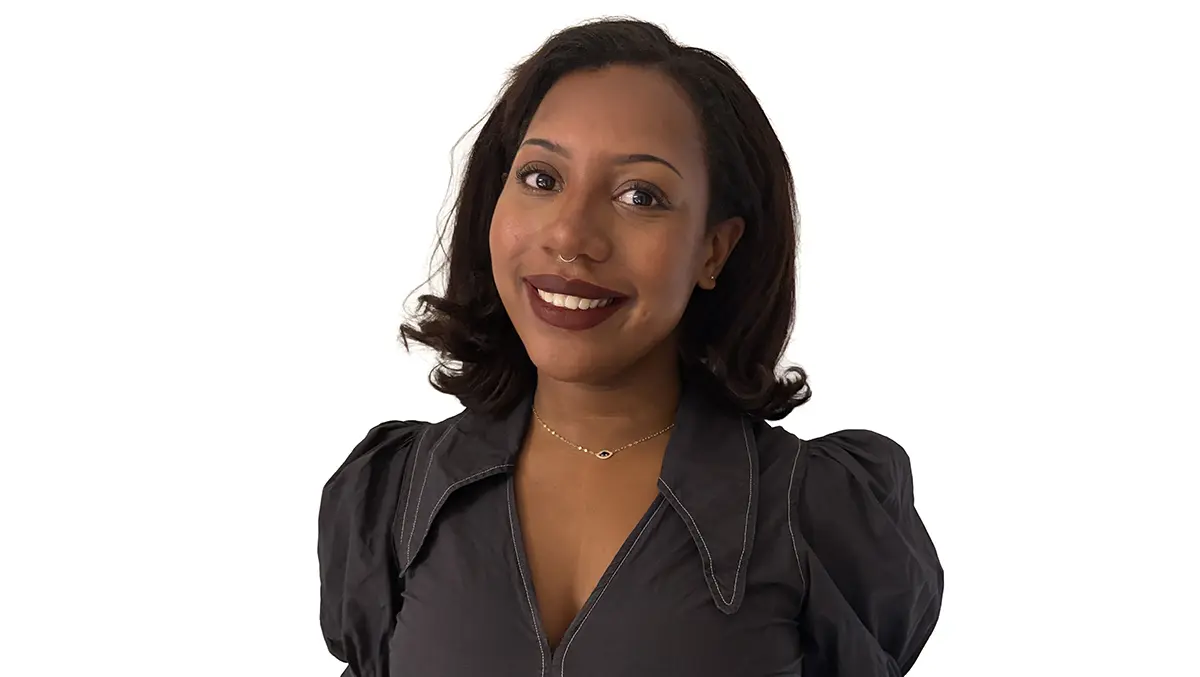
At thirteen, I was a music blogger. Teaching myself things online, writing about bands, figuring out how to build a small corner of the internet just because I wanted to. No roadmap. Just curiosity.
What came after that was less poetic. A degree. Finance sector jobs. Admin roles. A few countries. A lot of rooms that were not designed with me in mind.
At twenty-four, I run my own AI company. And the path between those two points is not the clean origin story people tend to expect. It involved qualifications that did not open the doors they were supposed to, industries that made space for women in theory and not in practice, and a long, slow realisation that the rooms I kept being allowed into were not the rooms where the actual decisions got made.
I tell that version because it is the honest one. And because the women who need to hear it today are not only the ones who feel underqualified. They are also the ones who did everything right and still found themselves on the outside of something.
It's what led me to build Dawn Intelligence. I kept noticing a gap. Most institutions working in this space are not short of data. They are short of interpretation. There is a difference between a dashboard that tells you something already happened and intelligence that tells you something is building. I believe we can do better than that. That we can read pressure before it breaks.
What I brought to that problem was not just curiosity. It was years of sitting in professional environments that handled data badly, made decisions slowly, and rewarded the appearance of competence over its substance. Finance. Administration. Male-dominated industries where the informal architecture of power was more important than anything written in a job description. I watched how institutions actually work, as opposed to how they present themselves, and that education turned out to be more useful than anything else.
Here is what I want to say on International Women's Day, particularly to anyone who recognises that version of events.
The technology being built right now will shape how institutions respond to domestic abuse, how schools identify children at risk, how police forces allocate resource, how local authorities decide where to intervene. Those systems are being designed by someone. The values, assumptions, and blind spots of the people designing them go directly into the architecture.
If the people designing them have never had to navigate a male-dominated workplace while being taken seriously. Have never had to fight for a decision to be heard in a room that had already made up its mind. Have never lived with the particular exhaustion of having the right answer and the wrong profile. That absence shows up in the work. It shows up in systems that are confident when they should be cautious, and in tools that optimise for what is easy to measure and quietly ignore everything else.
This is not a pipeline problem. It is not solved by more women studying STEM, though that matters. It is a power problem. And it is not fixed by making existing rooms slightly more accessible. It is fixed by people who have spent years understanding how those rooms work deciding to build different ones.
I toured with bands before I ended up in any of this. I have worked in finance. I have done the admin jobs and lived in the countries and sat in the meetings where I was the youngest person and the only woman and both simultaneously. All of it was information. None of it was wasted.
The work I care about now sits at the intersection of technology, institutional accountability, gender, and power. It does not simplify into a soundbite. It is not comfortable. And it is not finished.
What I know is this: the gap between the technology that exists and the technology that should exist is where the work lives. And the people best placed to close that gap are not the ones who have only ever been inside the rooms where power is comfortable. They are the ones who have spent years watching from the edges of those rooms, understanding exactly how they function and exactly what they miss.
You do not need a perfect origin story. You need to know what you have seen, be honest about what it means, and be stubborn enough to build something with it.