

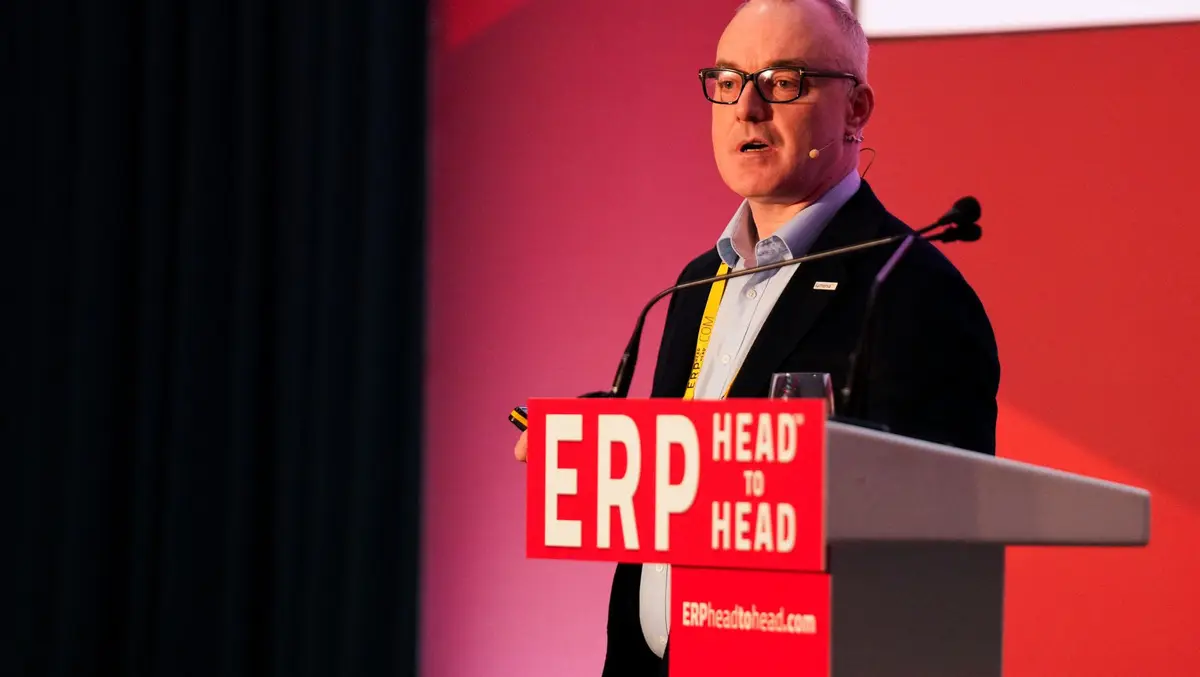
Lumenia's Birmingham ERP event draws record buyer interest
Thu, 2nd Apr 2026
Lumenia Consulting has concluded its ERP HEADtoHEAD event in Birmingham, which drew more than 180 attendees.
The two-day programme brought together senior ERP buyers and project teams from manufacturing, pharmaceuticals, retail, aerospace, the public sector, construction safety, facilities management and hospitality. Attendees ranged from mid-sized businesses to companies with turnover above £1 billion.
Buying-team participation reached its highest level at the event so far, reflecting demand for side-by-side software comparisons as many organisations reassess core business systems. The format centres on script-based demonstrations in which vendors respond to the same business scenarios, allowing delegates to compare systems on a like-for-like basis.
Buyer Priorities
Discussions at the event highlighted several issues shaping ERP purchasing decisions. Among the most prominent were the growing role of agentic AI in business processes, the practical difficulties of cloud migration, and the continuing importance of change management in large transformation projects.
Buyers also raised concerns about running major ERP programmes while maintaining day-to-day operations. Those pressures have become more pronounced as businesses try to manage costs, staffing limits and operational risk while replacing ageing systems.
Legacy technology remained a recurring issue. Delegates pointed to long-established platforms, heavy customisation, uncertain migration paths and integration problems as obstacles that continue to complicate ERP decisions.
The Birmingham event featured 14 ERP vendors and six complementary solution providers, alongside panel sessions and Lumenia-led discussions on readiness, selection criteria, transformation risks and AI adoption. Attendees could also meet vendors and advisers on the exhibition floor.
Structured Comparisons
The event has developed around a model that differs from broader technology conferences, where software suppliers often present products separately and on their own terms. By contrast, the HEADtoHEAD structure is designed for buyers seeking direct comparison before committing to a shortlist or investment process.
That approach appears to be attracting wider interest from finance, technology and transformation leaders navigating a more crowded ERP market and a broader range of deployment options. Cloud-based systems, hybrid models and AI-related additions have increased the number of factors buyers must weigh when planning replacements or upgrades.
For many organisations, ERP decisions have also become more closely tied to broader operating models. Choices about financial systems, supply chain workflows, procurement, and reporting increasingly sit alongside decisions on data governance, automation, and organisational change.
That wider context helps explain why change management featured so strongly in Birmingham. While software functionality remains central, implementation risk often depends on user adoption, executive sponsorship, process redesign and the ability to sustain momentum through lengthy programmes.
"What stood out most at this year's was the sense of momentum across the ERP community. The two-day programme sparked the kind of conversations that only happen when you put motivated project teams in the same room," said Ian O'Toole, managing partner at Lumenia Consulting.
His remarks reflect a market in which buyers are under pressure to make major technology decisions without full certainty on budgets, delivery timelines and the practical impact of new AI tools. Interest in agentic AI at the event suggested that organisations are moving beyond general discussion and are examining where more autonomous process support might fit within finance, operations, and supply chain work.
At the same time, delegates appeared cautious about the gap between strategic ambition and the reality of implementation. Cloud migration, while widely discussed for years, remains uneven across many industries due to cost, technical debt, and concerns about disruption to established processes.
Lumenia traced the event's UK development back to its first local edition in Reading in 2016, followed by years in Milton Keynes and virtual versions during the pandemic. The Birmingham gathering indicates that interest in in-person ERP evaluation remains strong, particularly among organisations that want cross-functional teams involved before a system selection moves forward.
"Many buyers spoke openly about the challenge, and necessity, of resourcing major transformation programmes alongside the ongoing demands of business-as-usual in a volatile global economy. That honesty, and the willingness to learn from one another, is what makes this event so valuable," O'Toole said.