

OpenAI adds teen safety & learning tools to ChatGPT
Mon, 20th Jul 2026
OpenAI has outlined new teen-focused safety and learning measures for ChatGPT, including stronger protections, expanded parental tools and more learning features for users under 18.
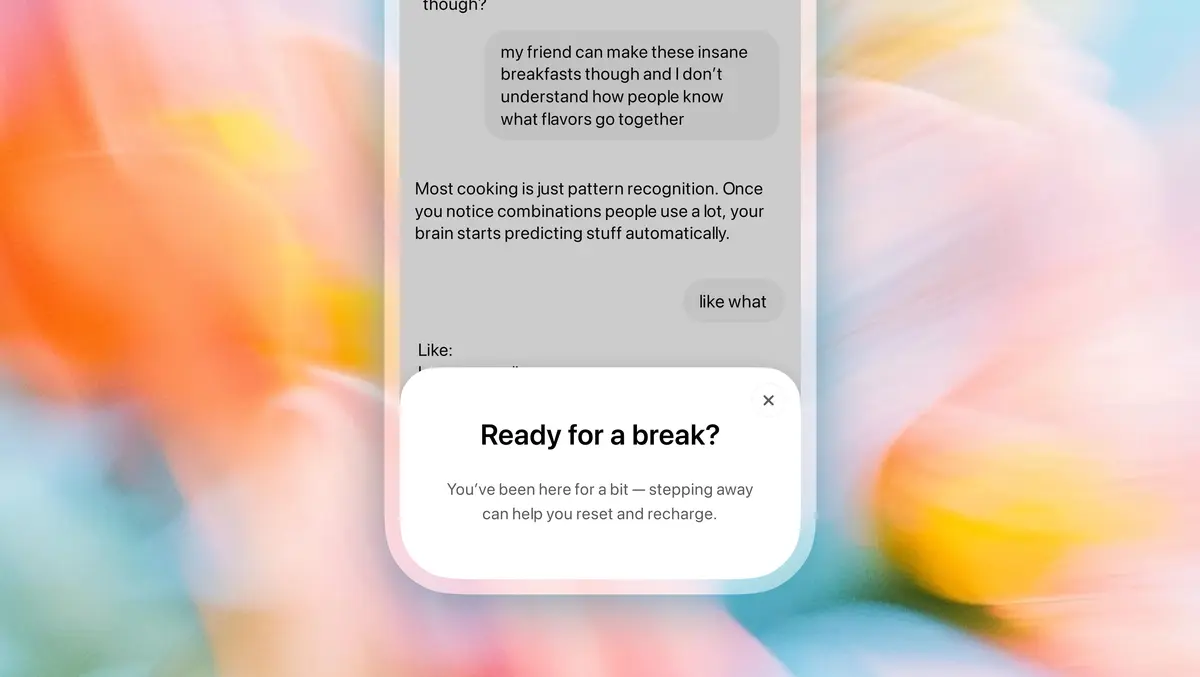
The changes include more frequent break reminders for teens who spend extended periods in ChatGPT, wider parental notifications in high-risk cases and broader use of Study Mode for schoolwork and revision.
According to OpenAI, nearly nine in 10 teenagers who use ChatGPT in a given week use it for learning, information, skill-building or productivity. The company argues that teenagers' access to artificial intelligence should be paired with safeguards tailored to their age group.
It now automatically provides a more age-appropriate experience when its system estimates a user is under 18. Those users can still use ChatGPT for study and creative tasks, but face tighter restrictions around graphic violence, self-harm, risky viral challenges, unhealthy body-image material and dangerous, romantic or sexual roleplay.
Learning tools
A central part of the update is Study Mode, which OpenAI said was designed with teachers, learning scientists and pedagogy experts to guide students through problems step by step rather than simply provide answers. Parents with linked teen accounts can now switch the feature on through parental controls, making it the default for any new chat started by the teenager.
OpenAI has also introduced education-focused starter prompts for teenagers. These are designed to break topics into simpler steps, turn notes into study guides, create flashcards or practice questions, and check evidence and clarity.
Interactive maths and science experiences launched earlier this year now attract 18 million weekly users and cover more than 300 topics, including integrals, mitosis, moon phases and photosynthesis, OpenAI said. It has also added an audio pronunciation feature for words in more than 61 languages.
Parental controls
Parents using linked accounts can already set quiet hours, turn off voice mode, manage access to image generation and receive notifications in some high-risk circumstances. OpenAI is now extending those notifications to cases in which a linked teen account has been deactivated for violating usage policies related to violent threats or acts of violence online.
Some of these interventions were developed with outside specialists, including Moonshot, which works on online violence prevention. The aim, OpenAI said, was to ensure measures for serious cases were effective while still respecting teen privacy and encouraging offline support.
Vidhya Ramalingam, Founder and Chief Executive Officer of Moonshot, commented on the role of parents in such situations.
"In Moonshot's violence prevention work, we've seen the critical role parents play in safeguarding teens online. Parents need to be equipped with the right information to support their children. Notifying a parent when a serious concern arises, with a route to more context, is a critical first step in giving families the chance to step in early and seek help. This kind of access is one of many measures that will be needed to keep young people safer while using ChatGPT," Ramalingam said.
Expert input
OpenAI said its work on young users draws on advice from teenagers, parents, teachers, child safety specialists, mental health professionals, researchers, governments and civil society groups. It cited work with organisations including the American Federation of Teachers, the American Psychological Association, Common Sense Media, everyone.ai and the Family Online Safety Institute.
It has also published educational resources in more than 50 languages for families and parents on responsible AI use. These materials are intended to help adults discuss AI with teenagers and understand how ChatGPT can be used in a home setting.
Wider debate
The announcement comes as technology companies face growing scrutiny over how generative AI products are used by younger audiences. Questions around age assurance, harmful content, time spent on platforms and the role of parental oversight have become more pressing as AI tools move into education and everyday use.
OpenAI framed its approach around four principles: putting teen safety first even when that conflicts with other goals, encouraging real-world support in times of need, treating teens as teens and setting clear expectations. It said it is seeking to balance broad access to AI for younger users with age-appropriate protections.
Over the past year, OpenAI added, it has strengthened default protections for teens, introduced age prediction systems, expanded parental controls and added family resources and learning features intended to support deeper understanding rather than answer-seeking alone.
"The North Star is to help ensure ChatGPT remains a tool for learning and creativity and not a substitute for real-world relationships."