

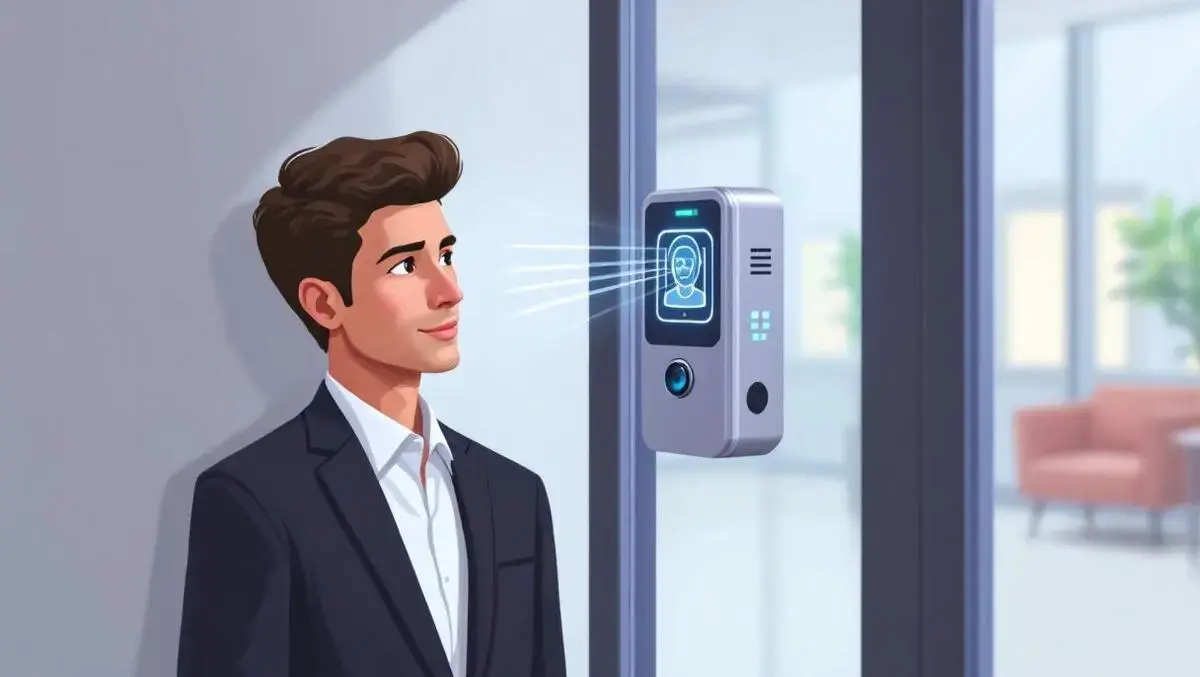
ROC launches Face1 biometric reader for access control
Thu, 26th Mar 2026
ROC has launched ROC Access and its first hardware device, ROC Access Face1, taking the Nasdaq-listed company into the physical access control market.
Face1 is a biometric reader for entry points that combines identity verification with video analytics from ROC's Vision AI platform. It is designed to work alongside existing access control systems, allowing customers to retain current arrangements for doors, zoning and permissions.
The launch adds a dedicated access control line to ROC's broader business in biometrics, video analytics and mission intelligence. Rather than replacing installed systems, the new offering is positioned as an additional layer that provides biometric identification and activity data at the access point.
According to ROC, the first device in the range is an ultra-compact reader with forged carbon fibre construction and a field-upgradable sensor. It supports different operating modes, from crowd-based access settings to single-user deployments in higher-security environments.
The device also includes watchlist functions, gun detection and multi-factor authentication with QR-embedded time-based one-time password technology. Data from the reader can also be combined through ROC's software platform with information from other fixed or mobile camera sources.
Integration Focus
This integration approach is central to ROC's pitch in a market where many organisations have already invested heavily in physical security infrastructure. Customers can modernise access control without removing legacy systems that already manage entry permissions and site layouts.
ROC's Vision AI platform sits behind the new access products, linking biometric identity verification with video analytics for identity authentication, threat detection and situational awareness across physical and digital settings.
Gary Jones, Senior Vice President of Commercial Security & Attendance Market at ROC, outlined the company's view of how access readers should evolve.
"ROC's proven performance in AI and compute capabilities mean that access control devices no longer need to be limited to single file or single purpose deployments. Our Face1 solution distributes components and processing power in a way that allows us to offer more security and functionality whilst dramatically reducing the risk of obsolescence experienced by many other biometric readers in the market. We designed Face1 with the philosophy that a biometric access control reader should be an integral part of the surveillance infrastructure, and not a siloed piece of hardware," Jones said.
Broader Market
Physical access control has increasingly become a point of overlap between traditional building security suppliers, biometric specialists and software groups seeking to combine identity checks with broader monitoring tools. ROC's entry reflects that convergence, particularly in settings where operators want a single system to bring together entry management, video feeds and threat monitoring.
ROC describes itself as a US developer and manufacturer of Vision AI products operating across biometrics, video analytics and mission intelligence. Its customer base includes defence, public safety and digital commerce, and the new access line extends those technologies into day-to-day building and site security.
The hardware is designed and manufactured in the United States and uses ROC's face-matching algorithms ranked by the US National Institute of Standards and Technology. That places the product within a segment of the market where procurement criteria can include domestic production, algorithm performance and the ability to upgrade devices already deployed in the field.
For ROC, the introduction of a dedicated reader marks a shift from supplying software and analytical tools to offering a more complete access control product built around its own hardware. The first release suggests the company sees growth in combining biometric verification with live intelligence at the point of entry rather than limiting those functions to separate surveillance or identity systems.