Data Security stories
It aims to curb credential sprawl and reduce the risk of compromised AI agents using persistent secrets to move across enterprise systems.
The rollout aims to help companies patch AI-driven systems faster, as Google adds identity, perimeter and detection controls across its cloud security stack.
Growing regulatory scrutiny is pushing mid-market firms in Australia and New Zealand to prove who owns AI tools, what they access and how they are controlled.
Security teams can now prioritise AI agent exposures by linking permissions to sensitive data across business systems, Reco said.
Enterprises can now inspect AI prompts and responses across clouds and data centres through a validated Fortinet-Equinix architecture.
Most firms now hand AI decisions once reserved for staff, but fewer than half can fully audit its actions, a new survey found.
The tools are designed to spot rogue AI behaviour and simulate attacks before autonomous systems can reach critical data or systems.
Roughly one in five organisations have already suffered a breach tied to unapproved AI connections, as visibility lags behind spending plans.
The seed round gives the San Francisco start-up fresh capital to expand engineering and commercial growth as it targets data theft in real time.
Consumer trust is lagging behind AI rollouts in Europe, where fewer than one in five organisations are on schedule with transformation work.
Businesses risk costly GDPR breaches because paper files can escape digital controls, go missing for months and be harder to trace.
Businesses and creators could cut cloud reliance as MSI widens its laptop push beyond gaming with local AI processing and broader productivity features.
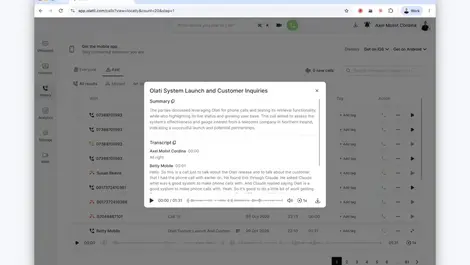
Users must approve the wording first, as Olatti now lets Claude and ChatGPT draft and send messages inside its business phone platform.
Delayed banking integrations are still forcing UK firms to rely on manual finance work, as 27% wait more than nine weeks to go live.
Strong SaaS demand lifted annual recurring revenue 27% to USD $495.1 million in the quarter, prompting AvePoint to raise full-year guidance.
The updates are designed to help businesses automate routine work while tightening oversight of AI use across their project data.
Regulated firms face a widening oversight gap as AI use in decision-making grows, with many still unable to fully explain the systems they use.
Lost access controls are leaving sensitive company systems open long after staff depart, with 64% of ex-employees still able to view data.
More than four in 10 finance and insurance staff using AI at work have shared sensitive data without their employer’s knowledge, a survey found.
Most Australian businesses now let AI make and carry out decisions once reserved for people, yet only 55% can audit every action it takes.