Graphics Processing Units (GPU) stories
Developers can now run Temporal workers on Cloud Run, with queues scaling capacity automatically and costs falling when work dries up.
The new chip is meant to lift Microsoft's AI services, with Maia 300 set for production deployments in 2027 and wider roll-out plans from then.
Operators can now pre-order a cooling unit that aims to reduce redesigns as GPU roadmaps shift and rack densities for AI servers keep rising.
Enterprises can now run AI agents in their own cloud or data centre without unpredictable usage charges, easing cost and data-control concerns.
As AI workloads shift from training to inference, firms risk stranded kit unless they build systems that can adapt over five to seven years.
The update lets Windows users run bigger AI models on-device, as AMD bids to make local processing a rival to cloud-based services.
Local AI features could run faster, stay private and work offline as chipmakers push laptops with dedicated neural processors.
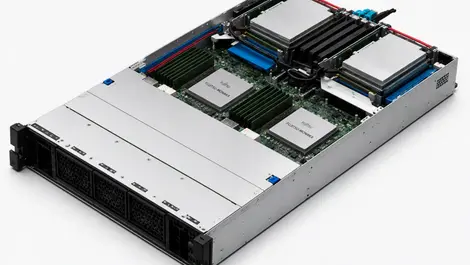
Data centre operators could cut energy use and rack space as Fujitsu's new 2nm chip targets AI inference with air cooling.
The buildout could give Australian startups, universities and enterprises more local AI compute as demand for training and inference rises.
Enterprises can now monitor and govern AI systems more closely as the new release adds benchmarking, compliance reporting and GPU controls.
Enterprises get new governance, monitoring and multi-tenant controls as Red Hat targets safer, scalable AI use beyond pilot projects.
The top-end iPhone range gains AI features and a variable-aperture camera, as Apple targets better photos, battery life and performance.
Rising AI demand is exposing cloud bottlenecks, as firms eye in-house open source systems to cut costs and limit vendor lock-in.
The deal puts a major open AI model hub under Nvidia's control, raising questions over whether its neutrality will survive intact.
Businesses could cut GPU use by up to 67% on repetitive AI workloads as Navyra's Ale reuses verified inference work instead of repeating it.
Private deployments are already running as the two firms aim to make live AI responses far quicker, targeting up to 3,000 tokens a second.
Built for enthusiasts with large graphics cards, the mid-tower starts at USD $89.99 and gives Formula V Line a first US retail foothold through Newegg.
The new range aims to help enterprises run AI inference and analytics on standard servers while adding stronger security and easier management.
Local AI development is moving onto Windows desktops and laptops, with Dell claiming support for 1 trillion-parameter models on the new workstation.
AI teams could cut integration work as the firms pair fast-access storage with lower-cost capacity for training, checkpoints and inference.