

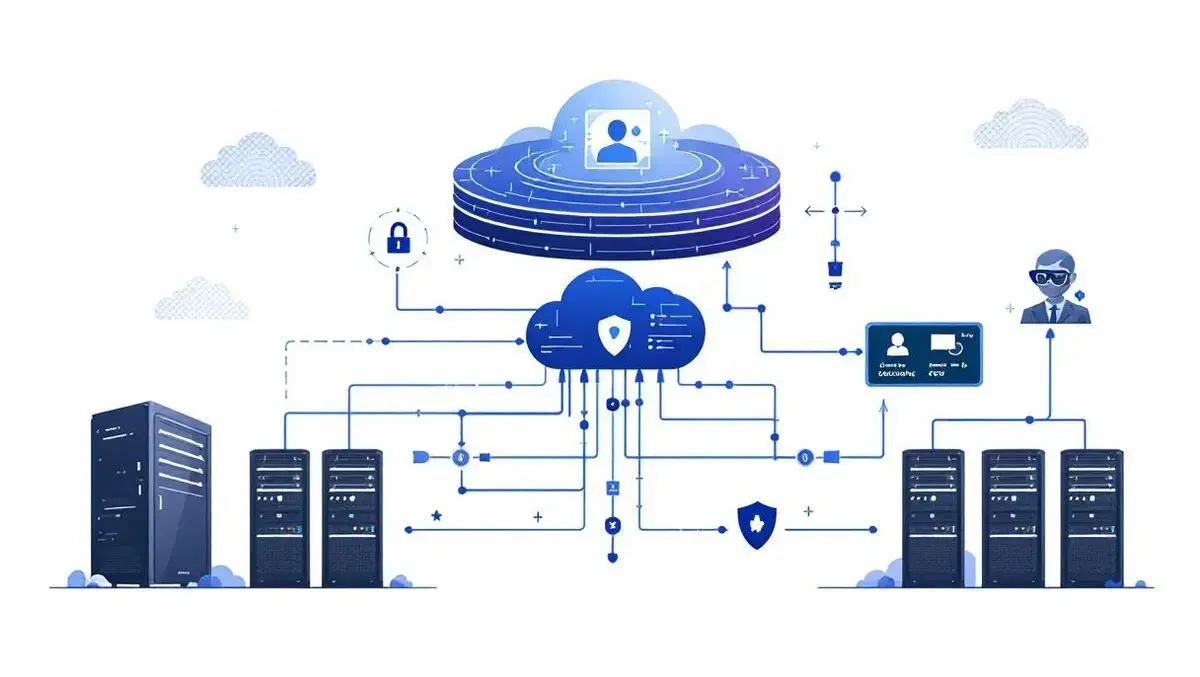

Cloudflare has launched Cloudflare Mesh, a private networking product for AI agents designed to connect people, cloud systems and software agents on a single private network.
The rollout reflects a broader shift as companies move AI tools from trials into day-to-day operations and face growing pressure to control how those systems access internal databases, applications and development environments.
The new service is intended to address a gap in existing private networking tools. Businesses running AI agents often need to give them access to internal services, yet many still rely on virtual private networks, manual tunnels or other older methods that can be slow to deploy and difficult to manage.
Mesh is designed to link laptops, office equipment and cloud environments, including AWS and Google Cloud, through one private network. According to Cloudflare, it can be deployed in minutes rather than days, with traffic routed through its global network.
The product is also designed to keep private services off the public internet. Cloudflare said sensitive data, including cloud infrastructure, distributed devices and AI tools, remains encrypted as organisations connect these systems across multiple environments.
Agent access
A central part of the launch is how Cloudflare is tying the networking product to its developer tools. Mesh is being integrated with Workers, Workers VPC and the Agents SDK, allowing AI agents running on Cloudflare's platform to access private networks through Workers VPC bindings.
That means developers can define in code which internal APIs or databases an agent can reach, rather than exposing broader parts of a company's infrastructure. Cloudflare said this allows more limited access for each agent, which could help teams keep testing systems separate from production systems.
Cloudflare also presented Mesh as a way to manage identity for software agents. Under that model, each agent has a distinct identity, allowing security teams to apply different access rules depending on the task it is carrying out.
One example the company gave was allowing a coding agent to read a staging database while blocking access to production financial records. That reflects a growing concern among businesses that AI systems may need broad access to be useful, while still creating security and governance risks if permissions are not tightly controlled.
Security pressure
The launch comes as technology companies compete to provide the infrastructure around AI agents, not just the models themselves. As more businesses try to automate software development, support work and internal operations with agents, demand is rising for tools that manage connectivity, identity and access to private systems.
Cloudflare has increasingly positioned itself around network security, developer services and traffic management, and Mesh sits at the intersection of those areas. By linking the product to its existing secure access and developer offerings, the company is aiming to make its network part of the operational layer used to run AI workloads.
Matthew Prince, co-founder and chief executive officer of Cloudflare, said the current networking model is not well suited to software agents. "AI agents are a standard in modern developer workflows, but they're being throttled by a networking model that was designed strictly for humans," he said.
He said companies have often had to choose between cumbersome tools and riskier workarounds. "For years, developers have been stuck with the choice between wasting days wrestling with complex, clunky VPNs, or taking the dangerous shortcut of exposing private infrastructure to the open web. Now, Cloudflare Mesh removes that trade-off. We are providing a secure bridge between agents and infrastructure-whether those agents are running on Cloudflare, in a private data center, or in another public cloud-ensuring every agent a team ships is secure from day one," Prince said.
Broader push
The announcement also shows how infrastructure providers are trying to define new categories around AI operations. Rather than focusing only on compute or model access, vendors are pushing products that cover the full path between a user, an agent and the internal systems that agent needs to complete work.
For Cloudflare, that means extending beyond web traffic and security services into controls for how autonomous software systems are deployed and governed. The company said Mesh provides an end-to-end lifecycle for AI agents by combining private connectivity with access control inside its developer platform.
Its argument is that AI agents should be managed more like employees or applications, with specific identities and permissions, rather than as generic software processes with broad network access. Whether that view gains traction will depend on how quickly businesses move agents into production systems where internal security rules are harder to bypass.
Cloudflare said Mesh allows organisations to create a private network walled off from the public internet while linking users, infrastructure and AI agents.