

Rise of AI Agents introduces new infosec risk: Okta
Mon, 16th Mar 2026
If agentic AI behaves in ways similar to humans on the network, they're going to need the same levels of authentication and access control. But where employees and associates tend to be a finite number, the same can't be said for AI agents: there might be 10 of them, there may be 10 000. And that demands granular security solutions capable of maintaining control and governance in complex environments.
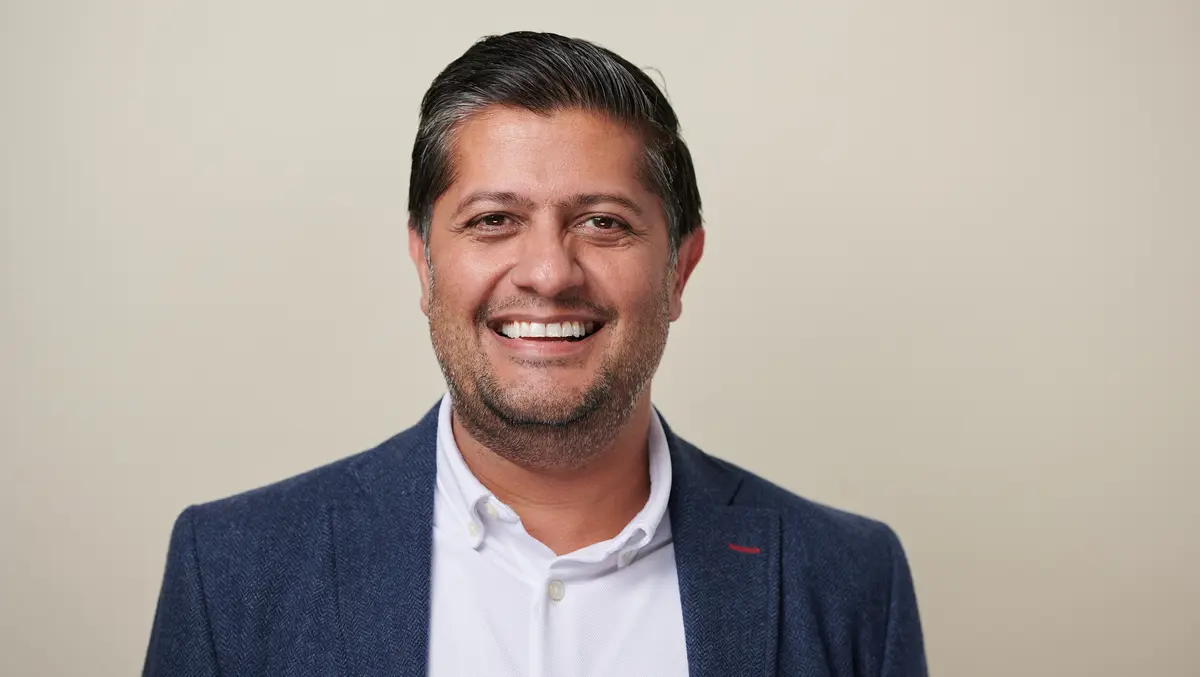
In addition to being in town for the Melbourne GP, that's what Okta President of Auth0 Shiv Ramji had on the agenda, underscoring an emerging urgent need for robust identity and governance frameworks as AI agents integrate into business operations. "As AI agents become the new workforce, with access to systems and data but no identity, lifecycle or clear accountability, it leaves businesses exposed," he warns.
Ramji says these autonomous systems tend to lack proper identity, lifecycle management, or accountability, presenting a critical governance gap amid the shift to production-level AI.
Just how much of a looming issue agentic AI running riot might be, Ramji says it's big, noting that a substantial percentage – which could be as much as 90% - of organisations are deploying AI agents, but somewhere closer to 10% have established clear governance protocols. That's a not-insignificant gap as AI moves beyond experimentation into core business functions.
Ramji contrasts traditional security models, designed primarily for human users, with the demands of AI-driven systems. He says in conventional setups, access is deterministic: users log in to predefined reports or applications based on roles and permissions.
By contrast, AI agents operate non-deterministically, leveraging intelligence to access diverse resources like file systems, the internet, APIs, databases, or other agents. "Traditional security models were built for people, not autonomous systems," Ramji points out. "The emerging risk isn't the AI model itself, but uncontrolled access and decision authority."
He advocated for treating AI agents with the same rigor as human employees. "If an AI agent can access systems and take action on behalf of the business, it needs an identity and the same controls as any employee."
To address these challenges, Ramji outlined key principles: strong authentication for agents, contextual and fine-grained permissions (often just-in-time and ephemeral), human-in-the-loop oversight, and scalable secure interactions across systems.
Without these controls, organisations face issues like data leakage, credential compromise, and policy violations, especially as agent numbers fluctuate rapidly with no theoretical limit on just how many of them there might be.
Ramji stresses the role of education and industry collaboration in mitigating agentic AI risks. He says Okta, under its Secure Identity Commitment, is championing best practices, developing new AI-focused products, and promoting open standards such as the MCP protocol for cross-application access.
In addition to meeting customers and working on driving awareness and education around the emerging security risks associated with new technological developments, Ramji was indeed trackside at the Grand Prix. He notes that in addition to sponsoring the McLaren team, Okta identity management helps enhance fan experiences. Identity is everything (in fact, some say hackers aren't breaking in, they are logging in…with stolen credentials) and that applies for fans as much as it does to employees or indeed AI agents.
As such, McLaren uses Okta's technology across digital properties, including websites, apps, and stores. Credentials are the key to login experiences, personalisation based on fan data, and integration with downstream systems for merchandising, content access, and overall engagement.
"Identity is a foundation of providing a 360-degree fan experience," Ramji confirms.
And in case you were wondering, being a sponsor of a Formula 1 team does come with perks; himself a fan, Ramji describes Okta's involvement as a considerable privilege.